How AI Is Transforming Chemical Manufacturing
With the right implementation, AI could be the next industrial revolution. Learn how AI in chemical manufacturing can transform your business for the better.
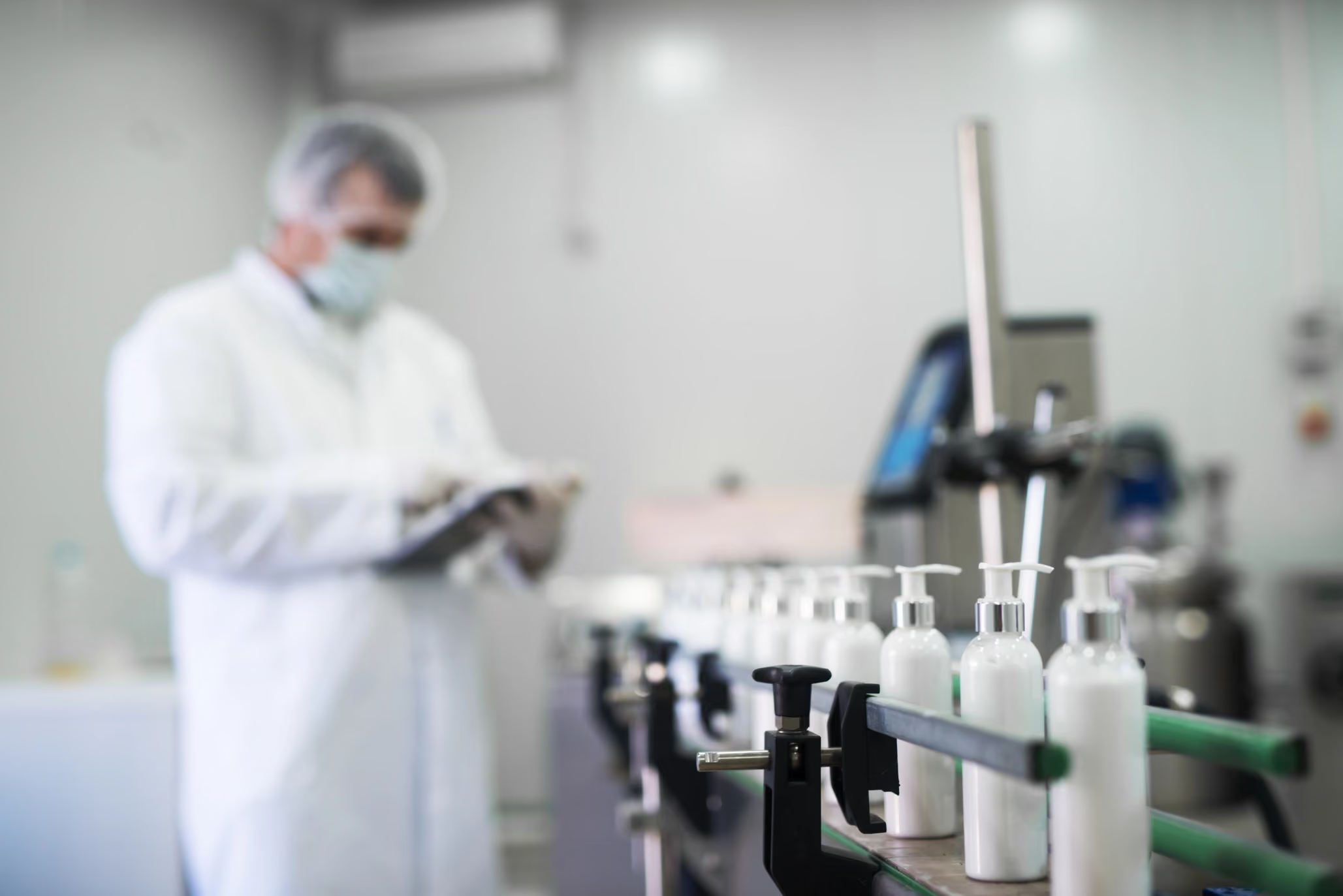
As multiple iterations of AI mature, more industries are adopting it into their operations—except for chemical manufacturing. Safety and security concerns, along with the implementation learning curve, created an adoption hesitation. However, many manufacturers are missing the productive benefits of AI.
A study presented at the American Chemistry Council (ACC) Annual Meeting showed the chemical manufacturing industry's labor productivity has grown less than 1% annually. However, 97% of industry leaders believe AI will positively impact their market share within three years.
Explore how AI is currently impacting chemical manufacturers and what the future could look like.
What AI Looks Like on a Chemical Plant Floor
Where AI Is Creating a Digital Transformation in Chemical Manufacturing
Here is how AI is bringing higher productivity to chemical manufacturing plants right now.
Asset Health Monitoring
There is nothing more frustrating than a surprise breakdown of equipment, leading to downtime, rushed repairs, and being behind schedule.
Predictive maintenance in chemical plants has AI learn from data points, such as vibrations, temperature, maintenance logs, and alert maintenance teams to potential issues. It can also create a more definitive and accurate maintenance schedule.
Predictive maintenance can prevent asset health issues and improve productivity. According to McKinsey, using AI in this way could lead to a “30 to 40% increase in maintenance labor productivity.”
Recommended: How to Build Predictive Maintenance Buy-In That Drives Results
Process Optimization
You can use AI for process optimization in many ways:
- Reducing downtime: As already mentioned, predictive maintenance can reduce downtime, and AI can also quickly answer operators’ questions and offer solutions.
- Optimizing supply chain: It’s important not only to have a steady supply of raw materials but also to have fair pricing. It’s estimated that raw materials can take away 50–70% of sales revenue. AI can alert your procurement team to low supplies with enough time to research different options (or AI can offer options), and provide supply chain information based on data from around the world.
- Tracking expiration dates: If you work with perishable raw materials, it can be difficult to track their expiration dates. You can create an AI system that not only tracks expiration dates but also alerts you when you are getting close to expiration—preventing money and resource waste.
- Improving energy management: By reviewing past operations, AI can identify solutions to improve energy output. It can analyze your entire manufacturing system to identify opportunities to reduce energy use or to maximize output with similar energy use.
Data Collection and Summarization
Chemical manufacturing requires extensive data collection (studies, lab experiments, trials, etc.), and is usually organized into various systems or teams. An incomplete information system can make it difficult to make smart decisions regarding business.
You can compile all that data into AI and have it organize it for you. It will also summarize the information based on who needs it, making it easier to have business or operational discussions.
Quality Control
AI can assist with quality control through sensors, detection tools, and even camera visual tools. It’ll detect an abnormality quickly, preventing it from affecting other products in the batch.
It can also detect contamination in your chemicals so that you can stop production as soon as possible.
Safety & Risk Monitoring
Per a scientific study of process manufacturing in chemical and related industries: “A hybrid AI system can reduce the time, effort, and expense involved in a process hazards analysis (PHA) review; make the review more thorough, detailed, and consistent; minimize human errors; and free the team to concentrate on the more complex aspects of the analysis, which are unique and challenging to automate.”
AI safety monitoring in chemical manufacturing can ensure equipment is working properly and analyze what appear to be one-off accidents to understand the cause. This can offer better insight for operational managers to change techniques or tools to prevent more accidents.
Better Customer Acquisition and Retention
By utilizing AI’s ability to read your company’s data, science literature, and market updates, you can create new customer profiles and a plan to acquire them. McKinsey reports that new customer growth rate and sustained revenue uplift can increase to 10–20% with AI.
It can also learn from your current customers to better interact and anticipate their needs—improving your customer relationship. Which could lead to references or upselling opportunities while reducing churn by 10–20%.
Product Development
It can take a long time to develop new products. AI can speed up the process in many ways:
- Alert you to industry news: AI can scan and provide summaries of the latest industry news, so you are always aware of what’s going on. This could alert you to new discoveries or a potential partner, or when competition has improved their operations.
- Discover new formulations: Instead of discovering new chemicals or raw materials, AI can identify improvement opportunities for your current formulations. For example, a formula that provides better thermal stability or one that’s more sustainable.
- Offer adaptation ideas for current products: What if you aren’t using your current products to their full potential? AI can look at what you currently have, the materials you use, your manufacturing processes, and more, and offer new or improved products from what you already have.
What Is the Future of AI in Chemical Manufacturing?
It’s hard to say what exactly will happen in the industry a year from now, let alone 10. However, it’s safe to say that AI will change chemical manufacturing in three ways:
- Being an invisible partner: AI will improve human skills. Whether it’s predictive maintenance, warning maintenance crews, or giving researchers a wall to bounce off of, you’ll find more companies using AI as a partner in innovation.
- A greater focus on sustainability: AI will be influential in helping manufacturers discover and use better sustainable practices.
- Improved research and development: AI will accelerate the R&D process, enabling more discoveries in shorter timeframes by analyzing data, building predictive models, and more, while still leaving researchers in control.
Add AI to Your Chemical Manufacturing Operations Today
For this industry, AI creates value when it provides clear, defensible decisions. AssetWatch supports that approach with its end-to-end condition monitoring and predictive maintenance solution.
- Sensing (vibration, temperature, and oil analysis)
- Ai-driven diagnostics
- Certified expert review to validate findings and prioritize alerts
Learn more about our system and see how chemical manufacturers are receiving an average 8x ROI.
Stay Ahead of Equipment Issues
See how predictive maintenance can help your team prevent failures and keep critical assets running.
.avif)
AI That Tells Your Team Exactly What to Do Next


Upcoming Predictive Maintenance & Condition Monitoring Events
Discover the latest strategies in asset reliability and downtime reduction—browse our featured sessions below or view all upcoming events.


Predictive Maintenance Resources
Unlock expert strategies for better asset health—read our featured guides below or browse the full knowledge center.
_1.jpg)
_1.avif)