
Revolutionize Efficiency with Motor Condition Monitoring
Identify mechanical issues early with continuous monitoring designed for the assets that power your operation.
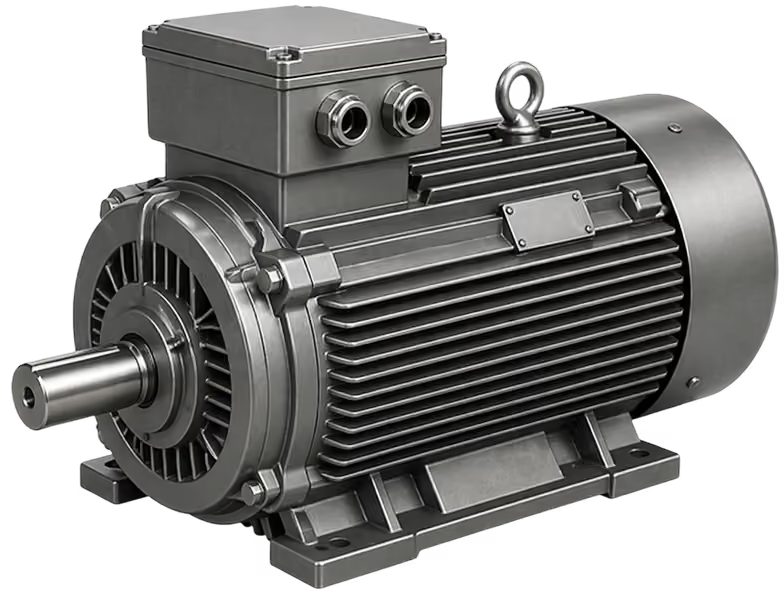
For the Motors You Can’t Afford to Lose
Motors are the workhorses of your facility. AssetWatch gives your team visibility to catch developing problems early—and tells your team exactly what to do next.
Reduce Unexpected Downtime
A continuous motor monitoring system provides data and trends days to weeks ahead of potential issues, giving teams the lead time to plan, not scramble.
Lower Maintenance Costs & Overtime
Predictive maintenance for motors tells you what’s wrong and why, so maintenance stays planned and budgets stay intact.
Extend Asset Life & Stabilize Production
Motor condition monitoring catches otherwise undetected problems to protect the motor and everything else around it, preventing damage to the whole drive train.
Motor Conditions We Monitor
Most motor failures have a fault signature that shows up in data before it shows up on work orders.

Bearing Wear and Defects
Bearing failures start below the surface — lubricant breakdown and sub-surface fatigue develop long before heat or noise appear. Vibration and oil analysis flag it weeks ahead, when a planned repair is still an option.
Rotating Component Imbalance
Uneven mass distribution identified by characteristic vibration patterns at running speed.

Shaft misalignment
A bent shaft — whether from a rotor bow, excessive load, or mechanical damage — produces a vibration signature that mimics misalignment but doesn't improve with realignment. Vibration analysis identifies the condition so the right diagnosis gets made.

Mechanical Looseness
Loose hold-down bolts, worn bearing fits, and cracked or defective bases allow the machine to move in ways it shouldn't. Vibration analysis picks up the characteristic response — directional vibration and phase shifts that point to where the structure has lost its rigidity.

Lubricant Degradation
Oil breaks down over time — viscosity drops, additives deplete, and the protective film between moving surfaces gets thinner. Oil analysis tracks the degradation continuously so a fluid change happens on schedule, not after the damage is already done.

Coupling and drive train issues
Worn coupling elements, loose keyways, or dry gear couplings put stress on every bearing and shaft on both sides of the drive. Vibration analysis picks up harmonics of turning speed and impacting in the waveform to gauge the severity of the failure.

Resonance and Structural Vibration
Resonance occurs when a machine's operating speed excites the natural frequency of a structure, producing high vibration in one direction that doesn't respond to balancing or alignment. Vibration analysis identifies the condition and separates it from other fault types so the right fix — speed adjustment, added mass, or stiffening — gets applied.

Oil Analysis (high particle count)
Elevated metallic and non-metallic particle counts flagged before wear rates accelerate to failure-level conditions.

Contamination
Dirt, water, and foreign particles in a lubrication system accelerate wear at a rate most maintenance teams don't see coming. Oil analysis tracks particle counts and cleanliness levels continuously, flagging contamination before it chews through bearings and gears.
A proven motor condition monitoring system ensures you have the data you need to act on issues while there’s still time to plan.
How AssetWatch Works for Motors
Motor failures leave evidence. AssetWatch is built to trace it, combining continuous monitoring with AI-powered analytics and expert human review. Whether you're managing one critical line or scaling reliability practices across multiple sites, your team gets more than just alerts—they get answers.
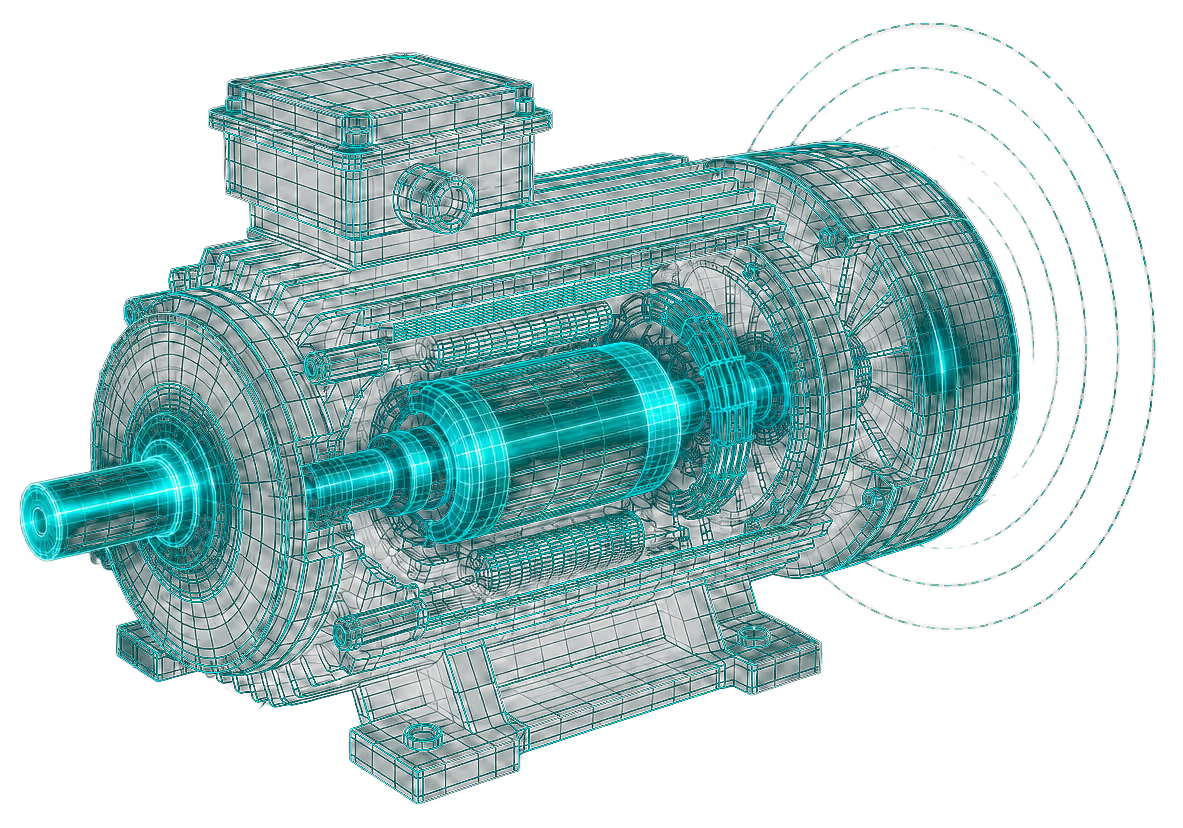
Sensors Installed on Critical Motor Points
AssetWatch vibration wireless sensors go on motors at key measurement points. Because setup is non-intrusive, no equipment shutdown is required.
Continuous Data Collection & Trending
Sensors run 24/7, automatically building a baseline for each motor and tracking signature changes over time. This ensures that fast-developing faults don’t get missed.
AI Analytics Identify Emerging Patterns
The AssetWatch platform runs automated detection against known motor-failure signatures, continuously tracking patterns and trends (not just threshold crossings) so your team understands what’s developing, not just that something changed.
Expert Validation & Prescriptive Recommendations
A dedicated condition monitoring engineer (CME) reviews and validates every finding. What reaches your team isn’t raw data; it’s a confirmed fault with prioritized recommendations on what to address and how fast it needs to happen.
Asset Saves in the Field
A CME flagged a critical refiner motor for inspection. After new plates were installed, vibrations dropped back to baseline, avoiding unplanned downtime.
Catching rising trends and atypical patterns, a CME recommended greasing the drive-end bearing on a bag house motor. That day, vibration normalized and the motor kept running.
High-frequency haystacking flagged insufficient lubrication. The CME recommended a straightforward fix—greasing motor bearings—that prevented full replacement.
Explore More Assets
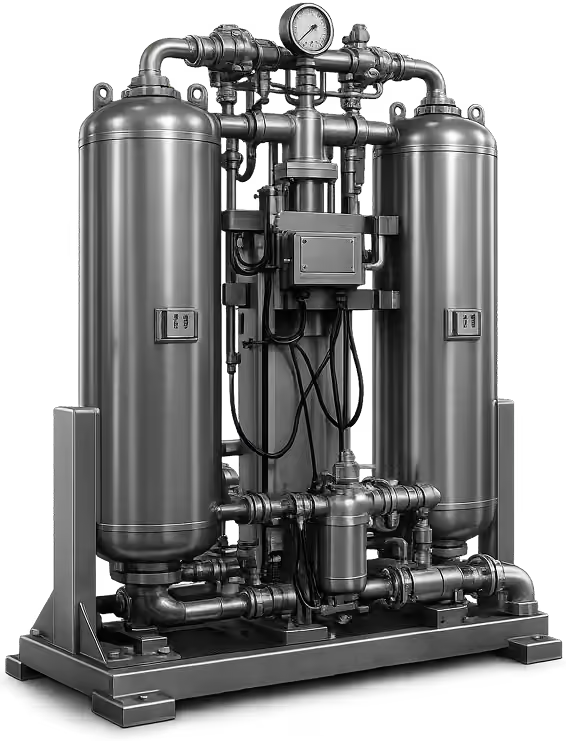
Compressors
Leverage continuous compressor monitoring for early anomaly detection, AI plus CME review, and prescriptive next steps.
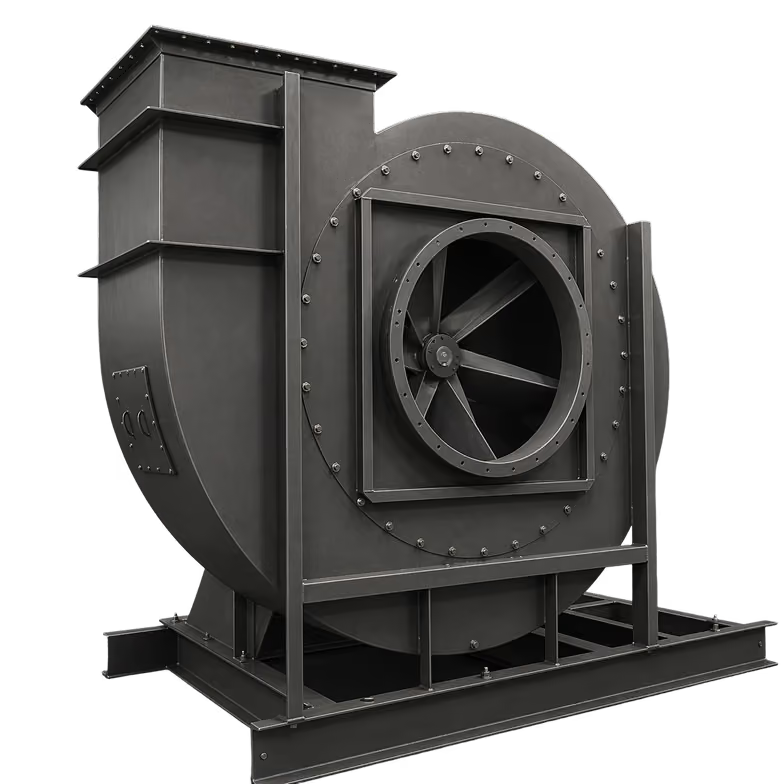
Fans and Blowers
Human-validated detection for fan and blower issues before they affect performance and reliability.
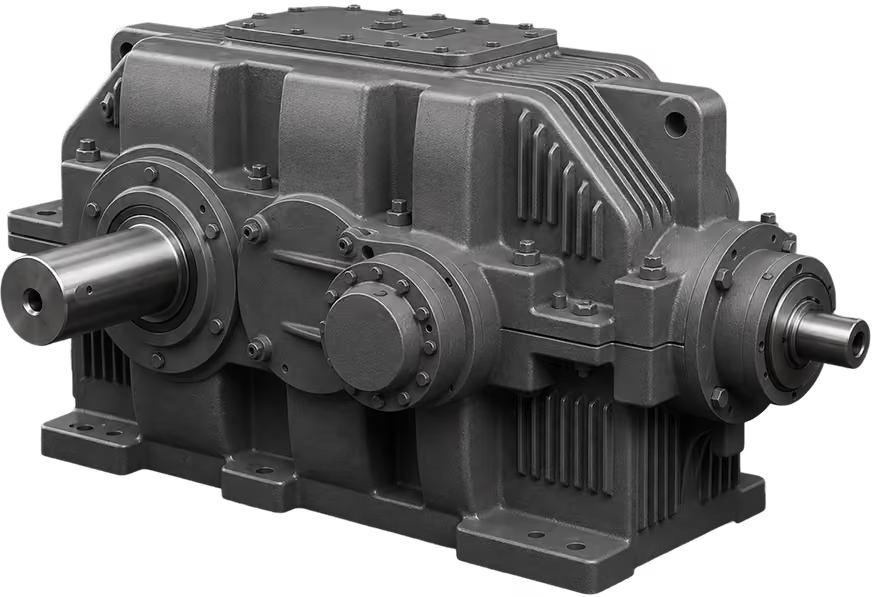
Gearboxes
Find fault patterns before they find your team with continuous gearbox monitoring.
Frequently Asked Questions
Motor condition monitoring is the practice of measuring and tracking motor health data to detect emerging faults, typically tracking:
- Bearing condition
- Lubrication health
- Imbalance
- Misalignment
- Looseness
- Drive train issues
A motor monitoring system like AssetWatch gives maintenance teams a continuous picture of how each motor is performing and what it needs. Facilities also track electrical health, and may utilize motor current signature analysis (MCSA) as a useful complement.
Motor vibration monitoring is one method of condition monitoring, which can also include other data inputs. Vibration is an incredibly useful signal for detecting mechanical faults early, which is why it anchors most motor predictive maintenance programs.
Vibration and oil analysis cover the fault types most likely to cause unplanned downtime. AssetWatch offers both continuous vibration monitoring and route-based vibration monitoring, depending on criticality.
Vibration monitoring can detect a wide range of developing motor faults at the inner race, outer race, or rolling element:
- Bearing wear
- Rotor imbalance
- Shaft misalignment
- Mechanical looseness
- Lubrication issues
- Coupling problems
- Resonance
Many of these conditions produce distinct frequency signatures that appear in vibration data well before a motor reaches failure.
Condition-based maintenance acts when a measured condition hits a defined threshold. Predictive maintenance uses trend data and pattern recognition to forecast failure and recommend action before that threshold is reached.
AssetWatch’s platform combines both. AI detects developing faults, and a dedicated CME delivers a recommendation specific to what the data shows.
Vibration data surfaces most mechanical fault types early and reliably. Oil analysis adds another layer, catching lubrication degradation and wear particles that vibration alone may not reveal. Together, they give a more complete picture of motor health and performance.
The answer depends on criticality and failure speed. Because fast-developing faults can reach critical severity quickly, high-criticality motors warrant continuous monitoring. For lower criticality, route-based vibration analysis is practical and cost-effective. Many facilities do both.
remote equipment monitoring
The Ways We Monitor
Every asset requires a different monitoring strategy. AssetWatch offers multiple monitoring solutions so you get the right coverage for every machine and every condition.