
Smart monitoring so Pumps never catch you off guard.
Continuous vibration monitoring, AI-powered analytics, and expert human review protects pumps before they impact flow, efficiency, or production.
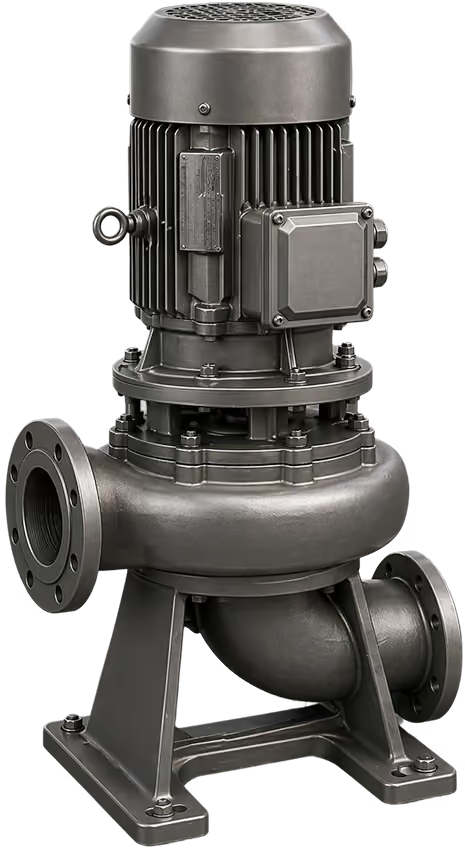
Built for the Pumps That Can’t Go Down
Pumps are a critical asset to production in any plant, but they’re prone to failure. With AssetWatch, your team gains the insight they need to intervene before pump problems become production problems.
Reduce Unexpected Downtime
Features like continuous pump vibration monitoring detect early mechanical signatures of wear, imbalance, and misalignment weeks before a single fault turns into widespread failure.
Lower Maintenance Costs & Overtime
Employing predictive maintenance for pumps helps you know what’s wrong and why, so you can order parts and schedule maintenance proactively rather than reacting to emergencies.
Extend Asset Life & Stabilize Production
A proactive pump monitoring system provides early detection of problems, protecting pumps from the unexpected breakdowns that damage surrounding equipment and extend downtime.
Pump Conditions We Monitor
Pump failures rarely happen without warning — they build over time through recognizable mechanical patterns. AssetWatch primarily detects mechanical pump faults through vibration monitoring, with broader condition insights supported by other data sources, including oil analysis where applicable:

Bearing Wear and Defects
Bearing failures start below the surface — lubricant breakdown and sub-surface fatigue develop long before heat or noise appear. Vibration and oil analysis flag it weeks ahead, when a planned repair is still an option.
Rotating Component Imbalance
Uneven mass distribution identified by characteristic vibration patterns at running speed.

Shaft misalignment
A bent shaft — whether from a rotor bow, excessive load, or mechanical damage — produces a vibration signature that mimics misalignment but doesn't improve with realignment. Vibration analysis identifies the condition so the right diagnosis gets made.
Mechanical Looseness
Loose hold-down bolts, worn bearing fits, and cracked or defective bases allow the machine to move in ways it shouldn't. Vibration analysis picks up the characteristic response — directional vibration and phase shifts that point to where the structure has lost its rigidity.

Cavitation
Cavitation sounds like gravel in the pump and causes real damage — eroding impellers and wearing seals faster than normal operation ever would. Vibration monitoring catches the characteristic raised noise-floor early, before the erosion causes further damage.
Hydraulic instability and flow turbulence
Turbulent flow and pressure fluctuations put constant stress on seals, valves, and downstream equipment. Vibration monitoring detects the flow instability and flags when the unit has drifted too far off its operating curve.

Seal wear and degradation
Worn or degraded seals allow contaminants in and lubricant out — quietly accelerating wear on everything they're supposed to protect. Oil analysis catches the early signs through rising particle counts and moisture ingress before a seal failure turns into a bigger repair.

Coupling and drive train issues
Worn coupling elements, loose keyways, or dry gear couplings put stress on every bearing and shaft on both sides of the drive. Vibration analysis picks up harmonics of turning speed and impacting in the waveform to gauge the severity of the failure.
Resonance and Structural Vibration
Resonance occurs when a machine's operating speed excites the natural frequency of a structure, producing high vibration in one direction that doesn't respond to balancing or alignment. Vibration analysis identifies the condition and separates it from other fault types so the right fix — speed adjustment, added mass, or stiffening — gets applied.
Lubricant Degradation
Oil breaks down over time — viscosity drops, additives deplete, and the protective film between moving surfaces gets thinner. Oil analysis tracks the degradation continuously so a fluid change happens on schedule, not after the damage is already done.

Wear particle detection
Metallic wear particles in oil are a direct signal that something inside the machine is breaking down — bearings, gears, or other contact surfaces generating debris under load. Oil analysis quantifies the particle concentration and type, giving a clear picture of where the wear is happening and how fast it's progressing.
Contamination
Dirt, water, and foreign particles in a lubrication system accelerate wear at a rate most maintenance teams don't see coming. Oil analysis tracks particle counts and cleanliness levels continuously, flagging contamination before it chews through bearings and gears.
Leverage condition monitoring for pumps that gives you the exact data you need to address these before the next breakdown, not after.
How AssetWatch Monitors Your Pumps
Most pump failures are preventable. AssetWatch combines continuous monitoring, AI-powered analytics, and expert human review to give your team actionable recommendations.
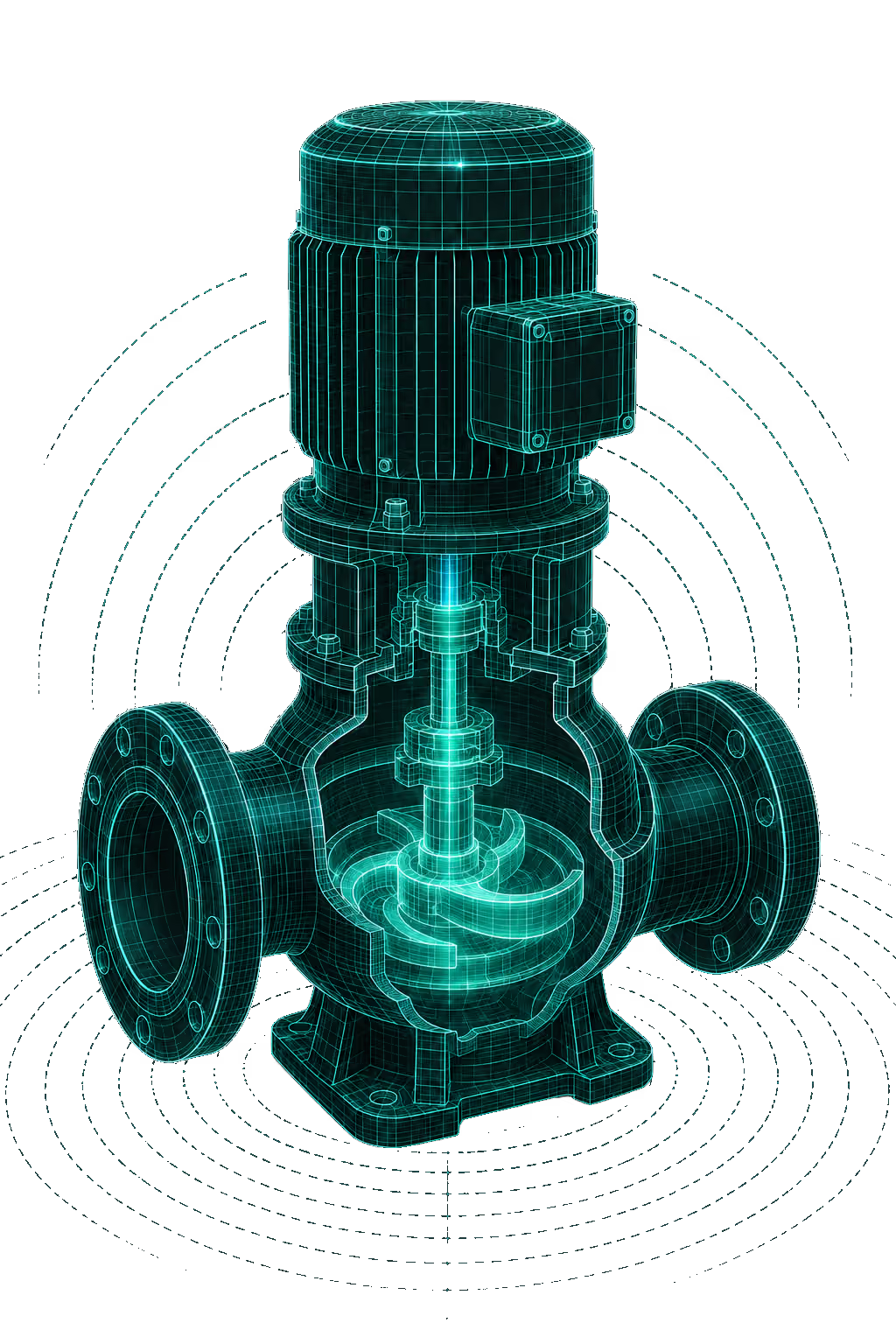
Sensors Installed on Critical Pump Points
Wireless sensors are installed at key measurement points. Setup is non-intrusive and doesn’t require equipment shutdown.
Continuous Data Collecting & Trending
Sensors collect data around the clock, building a baseline for each pump and detecting changes over time. This catches fast-developing faults that can emerge between route-based intervals.
AI Analytics Flag Emerging Issues
The platform runs automated fault detection against known signatures, flagging issues before they reach a critical severity level.
Expert Validation & Prescriptive Recommendations
Every flagged issue is reviewed by a dedicated CME, who validates the finding and delivers a prioritized recommendation with specific next steps.
Asset Saves in the Field
When AssetWatch detected multiple 5x running-speed harmonics, indicating a vane pass issue. A timely catch—losing this pump would have halted the entire TO refinery.
Vibration spiked at a startup, and AssetWatch flagged misalignment before any damage was done. The customer corrected the alignment, and the line kept running.
Two brand-new chiller pumps, already misaligned and with failing couplings. AssetWatch caught both before they caused a week of lost production. Repairs could be handled during scheduled downtime.
Explore More Assets
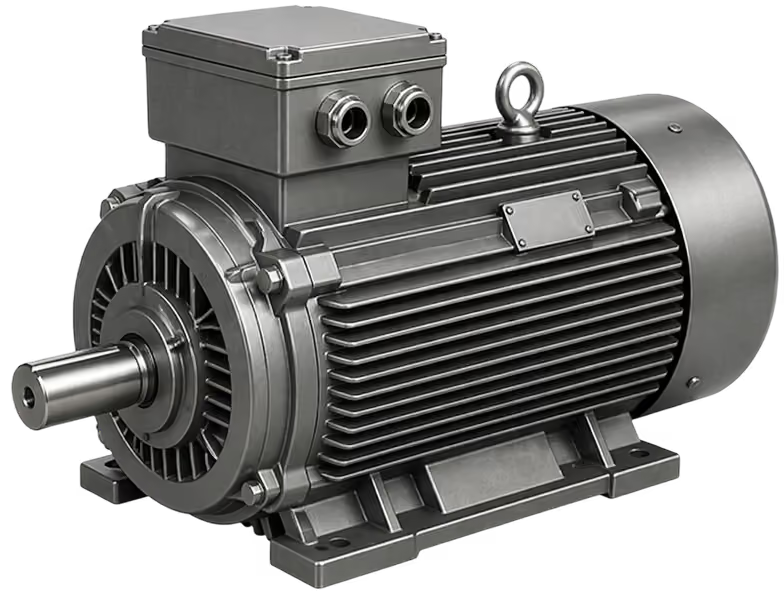
Motors
Identify mechanical issues early with continuous monitoring designed for the assets that power your operation.
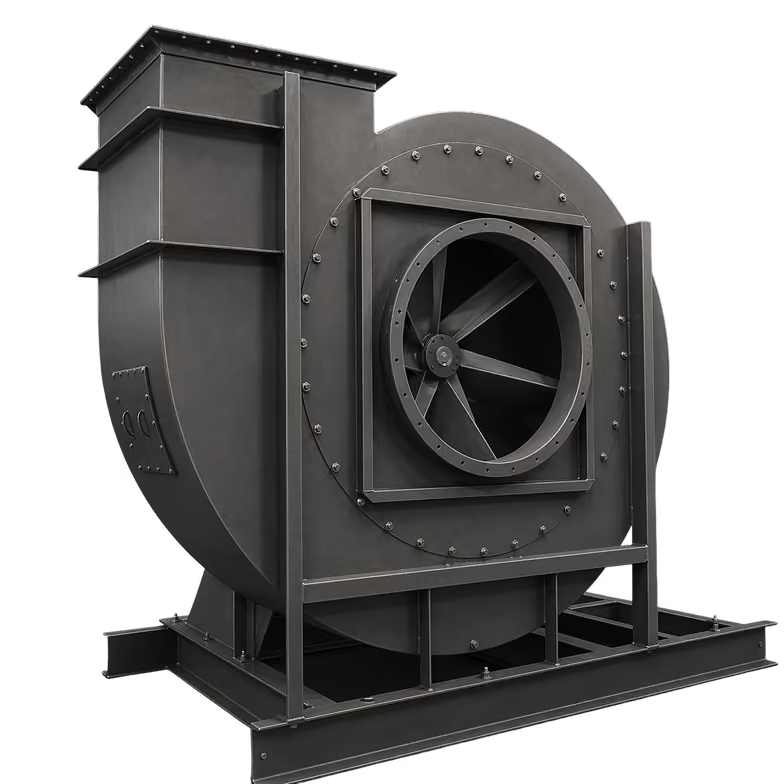
Fans and Blowers
Human-validated detection for fan and blower issues before they affect performance and reliability.
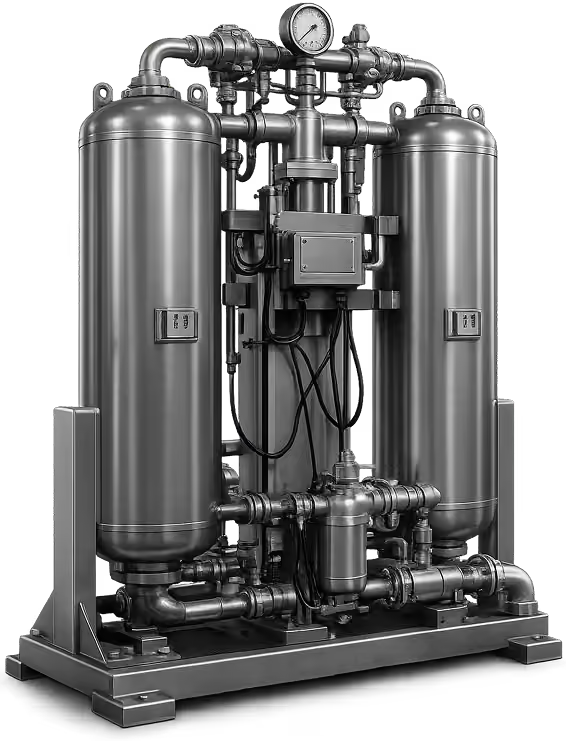
Compressors
Leverage continuous compressor monitoring for early anomaly detection, AI plus CME review, and prescriptive next steps.
Frequently Asked Questions
Vibration monitoring is one method within the broader practice of pump condition monitoring, which can include oil analysis, temperature, flow, and pressure data. Vibration is typically the most useful signal for detecting mechanical faults early, which is why it anchors most predictive maintenance programs.
AssetWatch offers both continuous vibration and route-based pump vibration monitoring, depending on asset criticality.
Condition-based maintenance acts when a measured condition hits a threshold. Predictive maintenance for pumps goes further, using trend data and pattern recognition to forecast failure and recommend action before that threshold is reached.
AssetWatch combines both: AI detects developing faults, and your CME delivers a recommendation specific to what the data shows.
The answer depends on criticality and failure speed. High-criticality pumps warrant continuous monitoring, since fast-developing faults can reach critical severity faster than a monthly route can catch them. For lower-criticality assets, route-based is a practical option. Many facilities run both.
AssetWatch monitors a wide range of rotating pumps with accessible bearing housing locations for sensor placement. We offer condition monitoring for centrifugal pumps, end-suction pumps, split-case pumps, multistage pumps, vertical turbine pumps, and positive displacement pumps (reciprocating and rotary). Essentially, if it has rotating components and it matters to your operation, it can be monitored.
remote equipment monitoring
The Ways We Monitor
Every asset requires a different monitoring strategy. AssetWatch offers multiple monitoring solutions so you get the right coverage for every machine and every condition.