
Fan and Blower Condition Monitoring That Works as Hard as Your Equipment
Human-validated detection for fan and blower issues before they affect performance and reliability.
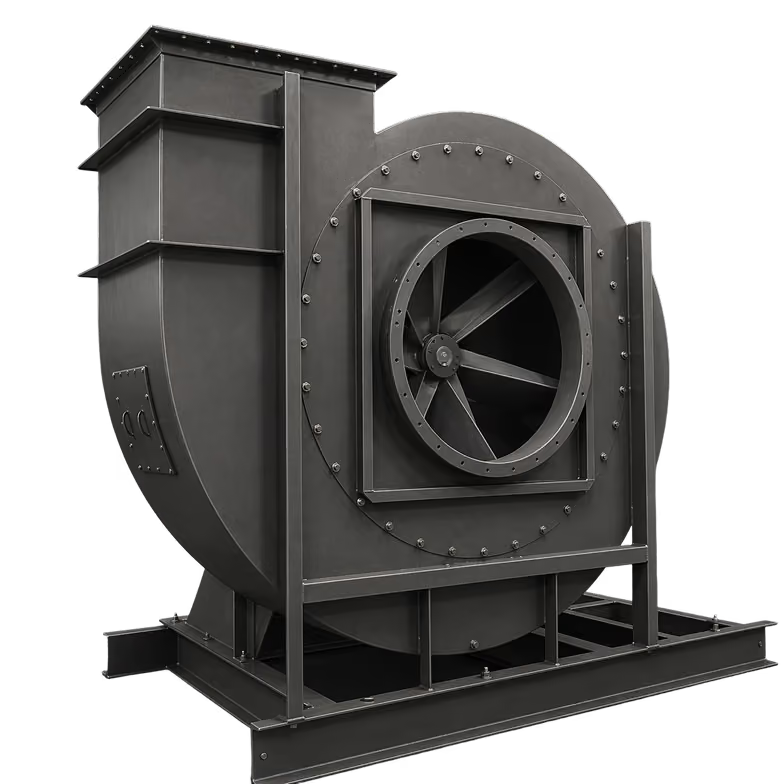
For Fans and Blowers that Keep Everything Running
Industrial fans and blowers are vital infrastructure. With AssetWatch, a developing fault becomes just a work order, not a shutdown.
Reduce Unexpected Downtime
Smart, continuous condition monitoring for fans and blowers flags issues like imbalances, looseness, and bearing wear, so downtime is planned, not forced.
Lower Maintenance Costs & Overtime
Predictive maintenance for fans and blowers, plus expert recommendations, provides data that gets to the root of failures, so the right parts get ordered, and the right problems are solved.
Extend Asset Life & Stabilize Production
Condition monitoring for fans not only protects the units themselves but also prevents collateral stress on surrounding structures and connected systems.
Fan and Blower Conditions We Monitor
Every fan failure has a pattern, with characteristic signatures that appear long before outward signs of trouble. AssetWatch software monitors for the mechanical fault signatures on your fan and blower equipment:

Imbalance
Debris buildup, a thrown balance weight, or a damaged rotor creates uneven mass distribution that shows up as high vibration at the shaft's running speed. Left uncorrected, the load on the bearings compounds quickly — especially on fans and blowers running at speed for extended periods.

Rolling Element Bearing
Inner race, outer race, and rolling element defects detected weeks before failure through continuous vibration monitoring.
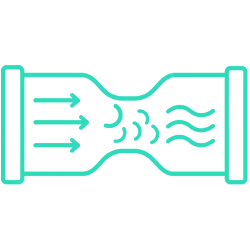
Airflow Restriction
Blocked filters, clogged strainers, or closed dampers starve the machine of airflow. Elevated running speed vibration combined with rising current draw catch it before heat buildup and accelerated wear set in.
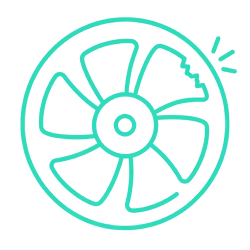
Blade Damage / Wear
Chipped, eroded, or clipped blades and impellers alter the vibration signature of the machine in a recognizable way. Vibration analysis tracks the change and flags it before efficiency drops or a blade fracture becomes the catastrophic issue.

Bearing Wear and Defects
Bearing failures start below the surface — lubricant breakdown and sub-surface fatigue develop long before heat or noise appear. Vibration and oil analysis flag it weeks ahead, when a planned repair is still an option.

Shaft misalignment
A bent shaft — whether from a rotor bow, excessive load, or mechanical damage — produces a vibration signature that mimics misalignment but doesn't improve with realignment. Vibration analysis identifies the condition so the right diagnosis gets made.
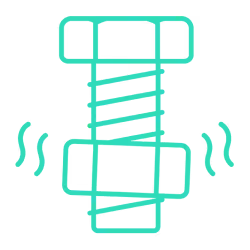
Mechanical Looseness
Loose hold-down bolts, worn bearing fits, and cracked or defective bases allow the machine to move in ways it shouldn't. Vibration analysis picks up the characteristic response — directional vibration and phase shifts that point to where the structure has lost its rigidity.

Belt Defects
Worn, cracked, or undertensioned belts show up as abnormal vibration patterns before they slip, snap, or damage the sheaves. Vibration analysis catches the condition early, giving maintenance a window to re-tension or replace before an unplanned stoppage.

Coupling and drive train issues
Worn coupling elements, loose keyways, or dry gear couplings put stress on every bearing and shaft on both sides of the drive. Vibration analysis picks up harmonics of turning speed and impacting in the waveform to gauge the severity of the failure.
Lubricant Degradation
Oil breaks down over time — viscosity drops, additives deplete, and the protective film between moving surfaces gets thinner. Oil analysis tracks the degradation continuously so a fluid change happens on schedule, not after the damage is already done.
Asset condition monitoring for fans and blowers tracks patterns upstream. Teams can ensure the right fix happens once instead of the same temporary fix repeatedly.
How AssetWatch Works for Fans and Blowers
Fan failures leave signs in the data before halting production. AssetWatch is built to find them, combining continuous monitoring with AI-powered analytics and expert human review. From single-line systems to multi-site operations, every alert comes with a validated finding and specific next steps.
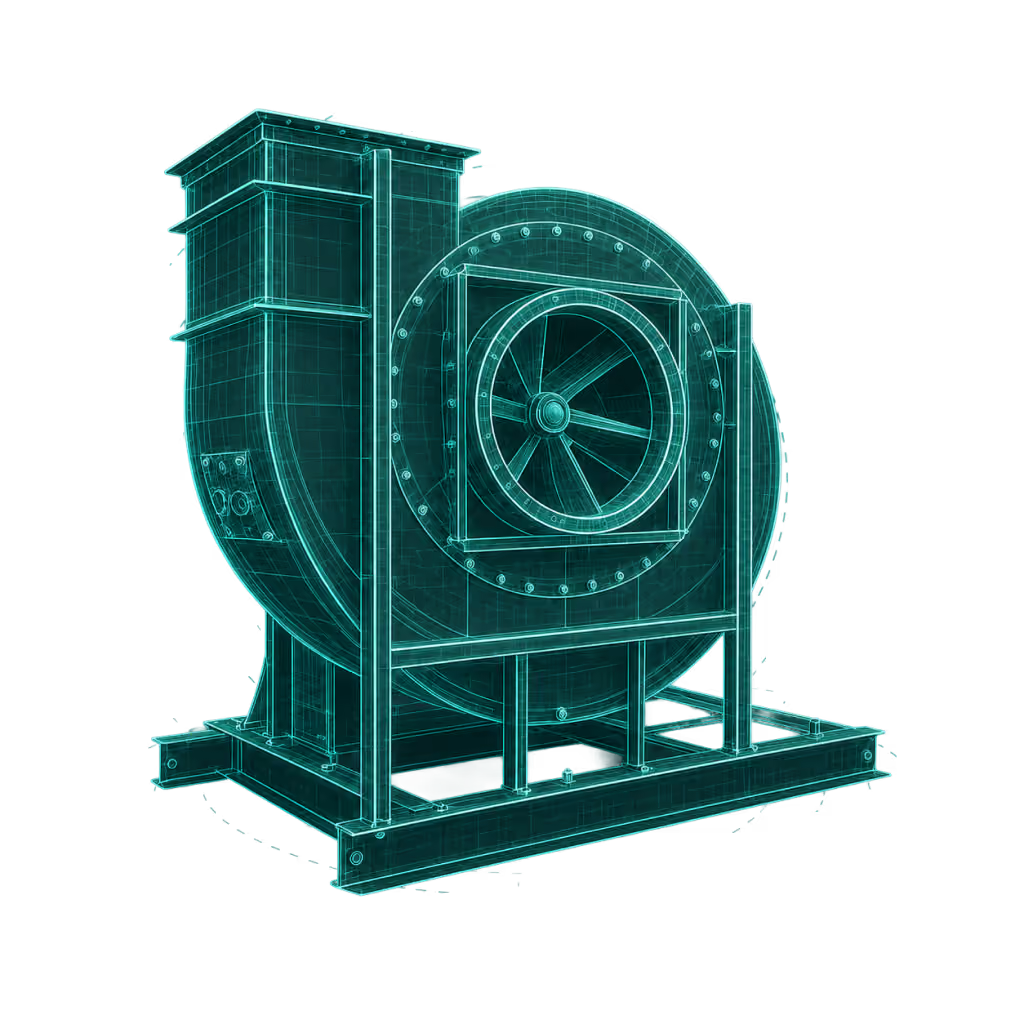
Sensors Installed on Critical Fan Points
Continuous Vibration wireless sensors go on at key measurement points, often bearing housings on both drive and non-drive ends, plus other critical measurement points as needed. Non-intrusive installation means no shutdown is required.
Continuous Data Collection & Trending
Sensors run around the clock, building a baseline for each asset by tracking signature changes over time. Looseness, wear, or imbalances—it all shows up in trend data.
AI Analytics Identify Emerging Patterns
The AssetWatch platform runs continuous, automated detection against known fan and blower failure signatures. It tracks how patterns and trends evolve, not just whether a number crossed a threshold. Your team sees what’s developing and why.
Expert Validation & Prescriptive Recommendations
Every finding goes through a dedicated condition monitoring engineer (CME). What reaches your team is a confirmed fault, a priority level, and specific recommended actions.
Asset Saves in the Field
A haystack pattern in the FFT and impacts at 4.5x turning speed pointed to a lubrication issue on an industrial fan's bearings, and greasing them reduced and stabilized vibration levels.
Both blower bearings were overheating past 200°F with high vibration, and lubricating them, replacing air filters, and checking mounting bolts resolved the issue and saved $45,000 in repair costs.
High vibration at motor and blower turning speeds pointed to possible structural looseness, and preventive maintenance including greasing bearings, checking belt tension, and tightening bolts resolved the risk.
Frequently Asked Questions
Condition monitoring for fans and blowers can detect a wide range of developing mechanical faults, such as:
- Bearing wear
- Imbalances
- Misalignment
- Mechanical looseness
- Resonance
For blowers and fans, predictive maintenance monitors for characteristic signatures in vibration and, where applicable, oil analysis data. This gives your team a proactive repair window.
Most fan and blower failures are predictable. Condition monitoring for fans and blowers provides continuous trend data with expert validation and specific repair recommendations. Instead of discovering a failed bearing during a production run, your team gets a confirmed finding and a recommended course of action at the first signs of failure.
AssetWatch’s platform leverages AI to detect developing faults, with a dedicated CME to deliver a recommendation specific to what the data shows.
Vibration monitoring is one method within the broader practice of fan and blower condition monitoring. It’s typically most valuable for detecting mechanical faults, which is why it anchors most programs for fans and blowers.
AssetWatch offers both continuous vibration monitoring and route-based vibration monitoring, depending on criticality. Condition monitoring may also involve oil analysis to cover fault types most likely to cause unplanned downtime.
For fans tied to ventilation, process stability, safety, or throughput, continuous monitoring is the stronger choice. Imbalance and looseness can escalate faster than monthly route-based intervals can catch. For lower-criticality fans and blowers, route-based vibration analysis is a practical and cost-effective option. Many facilities run both.
Recurring problems with fans and blowers are almost always a symptom of something upstream. Imbalances that keep coming back often point to buildup on the impeller, process contamination, or installation issues. Repeat bearing failures usually signal misalignment, lubrication problems, or structural looseness that the bearing replacement isn’t fixing.
Condition monitoring identifies the mechanical patterns behind repeat failures so your team fixes the actual problem instead of cycling through parts.
Explore More Assets
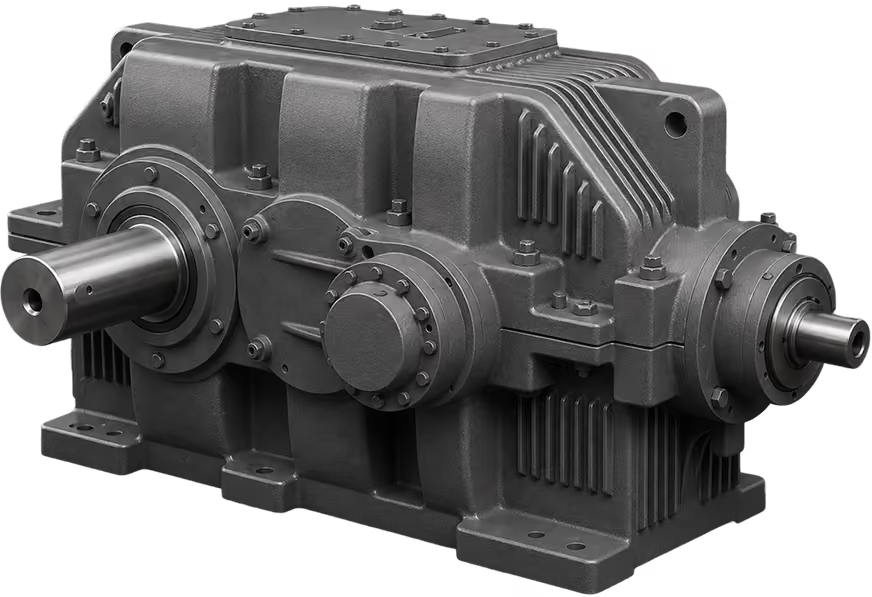
Gearboxes
Find fault patterns before they find your team with continuous gearbox monitoring.
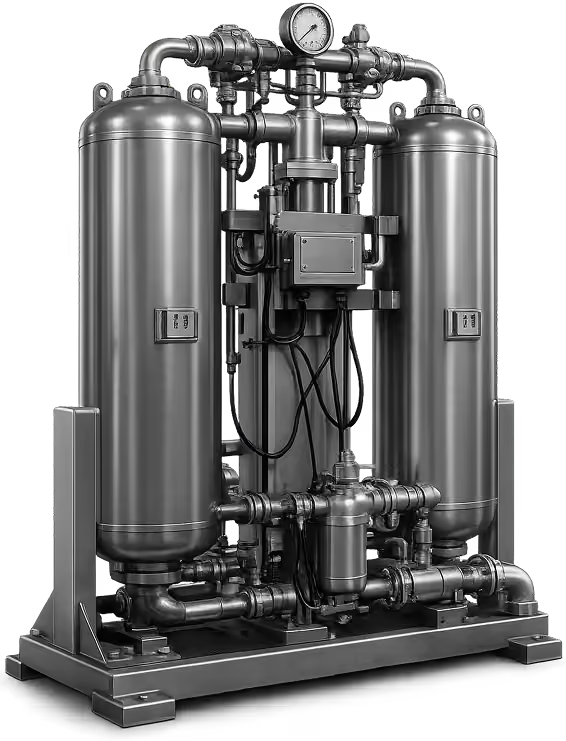
Compressors
Leverage continuous compressor monitoring for early anomaly detection, AI plus CME review, and prescriptive next steps.
Pumps
Continuous vibration monitoring, AI-powered analytics, and expert human review protects pumps before they impact flow, efficiency, or production.