Introducing AssetWatch Electrical Monitoring: Closing the Blind Spot in AC Motor Health
Introducing a new layer of condition monitoring that helps maintenance teams detect electrical faults earlier, gain deeper visibility into AC motor health, and reduce unplanned downtime.
Key Points
- Lorem ipsum dolor sit amet, consectetur adipiscing elit. Ut faucibus augue vel ante porttitor, sed euismod nibh fermentum
- Consectetur adipiscing elit. Ut faucibus augue vel ante porttitor, sed euismod nibh fermentum
- Lorem ig elit Ut faucibus augue vel ante porttitor, sed euismod nibh fermentum
By AssetWatch Condition Monitoring Engineering Team
Walk into almost any manufacturing facility and you’ll find AC motors driving critical equipment across the plant floor. Yet many of those motors are monitored primarily for mechanical problems, leaving a significant category of risk less visible: electrical faults.
Because many begin within motor windings or other electrical components, they can develop well before clear mechanical symptoms appear. That makes them difficult to identify through vibration monitoring alone.
Today, we're closing that gap.
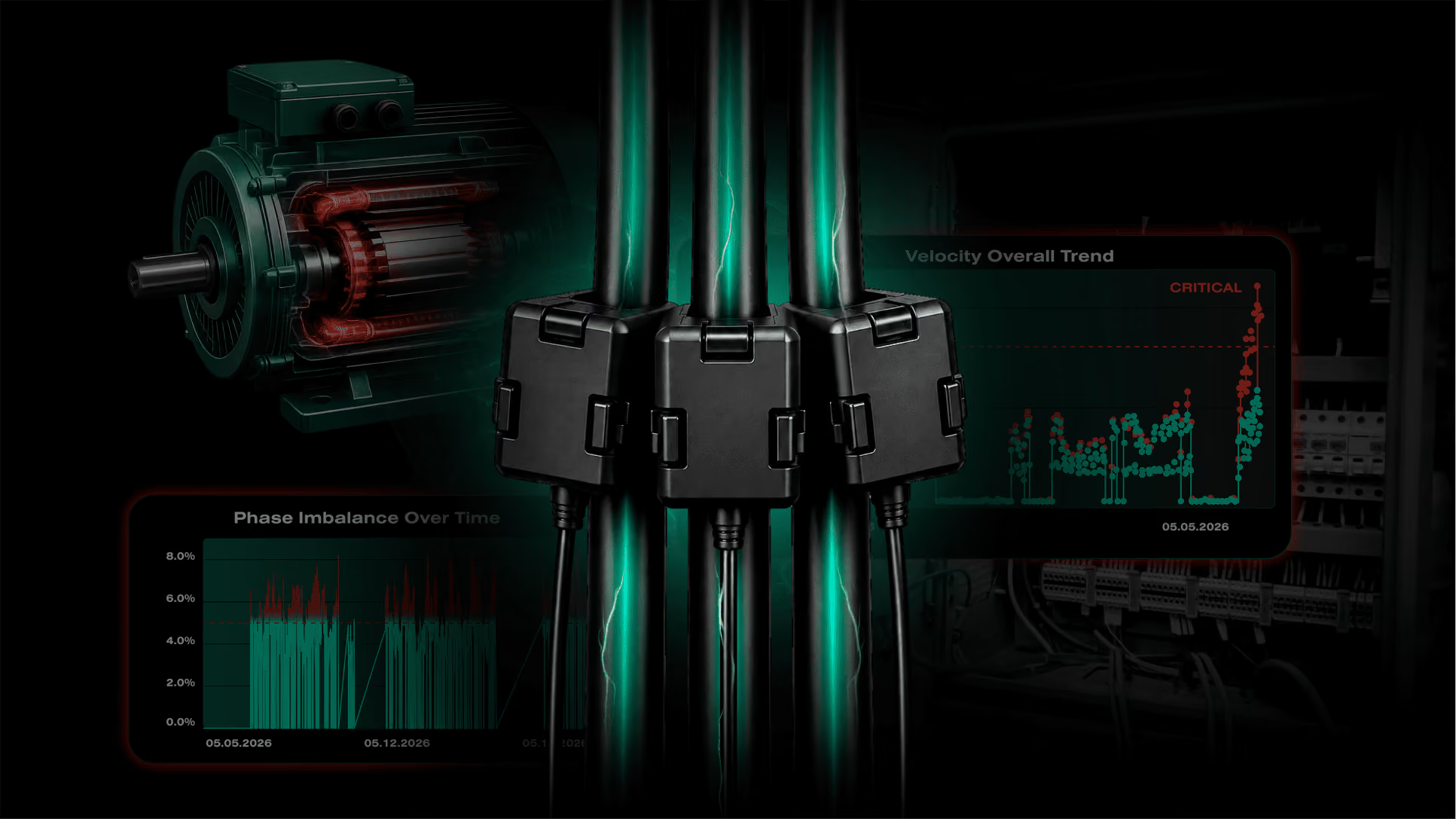
Key Points: AssetWatch Electrical Monitoring tracks three-phase current, runtime, and panel temperature, helping teams catch electrical faults earlier.
A Guide to Predictive Maintenance
How Electrical Monitoring Complements Vibration
Vibration monitoring is the workhorse of predictive maintenance, and it is exceptional at detecting mechanical degradation: bearing wear, imbalance, misalignment, and looseness. When mechanical degradation begins in a drivetrain, vibration monitoring is often the first signal.
But electrical faults often develop earlier. A motor can experience winding degradation, insulation breakdown, phase imbalance, or abnormal load conditions long before those issues create a meaningful vibration signature. Electrical data can show these faults earlier, which gives your team more time to plan.
The same is true for overload conditions and power transmission issues. A slipping belt, worn coupling, or changing process condition often appears in motor current behavior before it becomes obvious through vibration or physical inspection.
The result is a visibility gap. Maintenance teams may know when a machine is beginning to fail mechanically, but often have limited insight into how the motor is behaving electrically before that failure occurs.
That's where AssetWatch Electrical Monitoring comes in.
Why AssetWatch Electrical Monitoring Matters
AssetWatch Electrical Monitoring helps maintenance and operations teams see problems sooner, understand how equipment is being used, and make better decisions before downtime occurs.
By continuously monitoring motor current and electrical panel conditions, AssetWatch provides a new layer of visibility that complements vibration monitoring, helping teams identify risks that might otherwise go unnoticed until production is impacted.
Earlier Warning of Electrical Failures
Continuous current monitoring surfaces electrical anomalies (shifting load, current unbalance, and irregular operating patterns) as they emerge, often flagging a developing fault before it would register mechanically.
That additional lead time gives maintenance teams the opportunity to investigate, plan repairs, and avoid costly unplanned downtime.
Optimized Operations and Asset Utilization
Current data reveals how hard equipment is actually working.
Teams can compare current trends across paired or redundant motors to confirm balanced load sharing, flag overloaded assets or motors running harder than expected, and spot changing process conditions such as rising load, plugging, reduced pump performance, or equipment due for cleaning. Current patterns can also validate whether maintenance improved performance, while runtime and duty-cycle data let teams schedule maintenance around real usage rather than assumptions.
Broader Monitoring Coverage
Not every critical asset is easy or practical to monitor with vibration sensors.
Electrical monitoring reaches motors that are hard to access, enclosed, underground, or otherwise difficult to instrument, and assets where mounting a sensor directly on the driven equipment isn't practical. Because the sensor installs in the electrical panel or motor control center rather than on the machine itself, teams can extend visibility across far more equipment, including assets that previously ran with little or no monitoring.
Faster Root-Cause Resolution
When electrical and vibration data are viewed together, teams can more quickly determine whether a developing issue is electrical, mechanical, or process-related.
This reduces troubleshooting time, improves maintenance prioritization, and helps organizations focus resources on the problems that matter most.
How Do Electrical, Vibration, Temperature, and Oil Analysis Work Together?
Electrical monitoring delivers meaningful value on its own, but its full potential is realized when combined with AssetWatch's broader condition monitoring solutions.
Every fault, whether it originates in motor current or in the mechanical equipment the motor drives, leaves traces across different parts of the drivetrain. The more monitoring layers you have, the sooner developing problems can be detected and understood.
Vibration monitoring catches mechanical degradation that current alone cannot see. Current monitoring detects electrical and load-based issues that vibration cannot characterize. Temperature monitoring helps identify thermal consequences before they lead to damage. Oil analysis provides a detailed view of internal wear mechanisms that continuous sensors complement between sampling intervals.
Together, these four monitoring technologies, all unified within a single platform and supported by a Condition Monitoring Engineer dedicated to each plant, give reliability teams a more complete understanding of asset health and greater confidence in maintenance decisions.
How Does Installation Work?
AssetWatch Electrical Monitoring helps teams get to actionable insights quickly. CT clamps are installed inside the electrical panel or MCC and connected to a wireless, self-powered sensor, not mounted on the motor itself. AssetWatch supports the process, while a customer electrician handles the panel work. Once installed, data can begin flowing into the AssetWatch platform quickly, without a complex integration project.
A dedicated AssetWatch Condition Monitoring Engineer helps translate current, runtime, unbalance, and related trends into practical maintenance actions. Teams gain clearer visibility into motor behavior without needing specialized in-house expertise to interpret electrical signals.
AssetWatch Electrical Monitoring is available now.
Ready to see it in action? Request a demo at AssetWatch.com/getstarted.
Stay Ahead of Equipment Issues
See how predictive maintenance can help your team prevent failures and keep critical assets running.

Catch Electrical Faults Early, Before They Turn Into Costly Unplanned Downtime


Upcoming Predictive Maintenance & Condition Monitoring Events
Discover the latest strategies in asset reliability and downtime reduction—browse our featured sessions below or view all upcoming events.


Predictive Maintenance Resources
Unlock expert strategies for better asset health—read our featured guides below or browse the full knowledge center.
.png)
.png)
.png)