
electrical condition monitoring
Get the full picture of your AC motors.
Catch faults early.
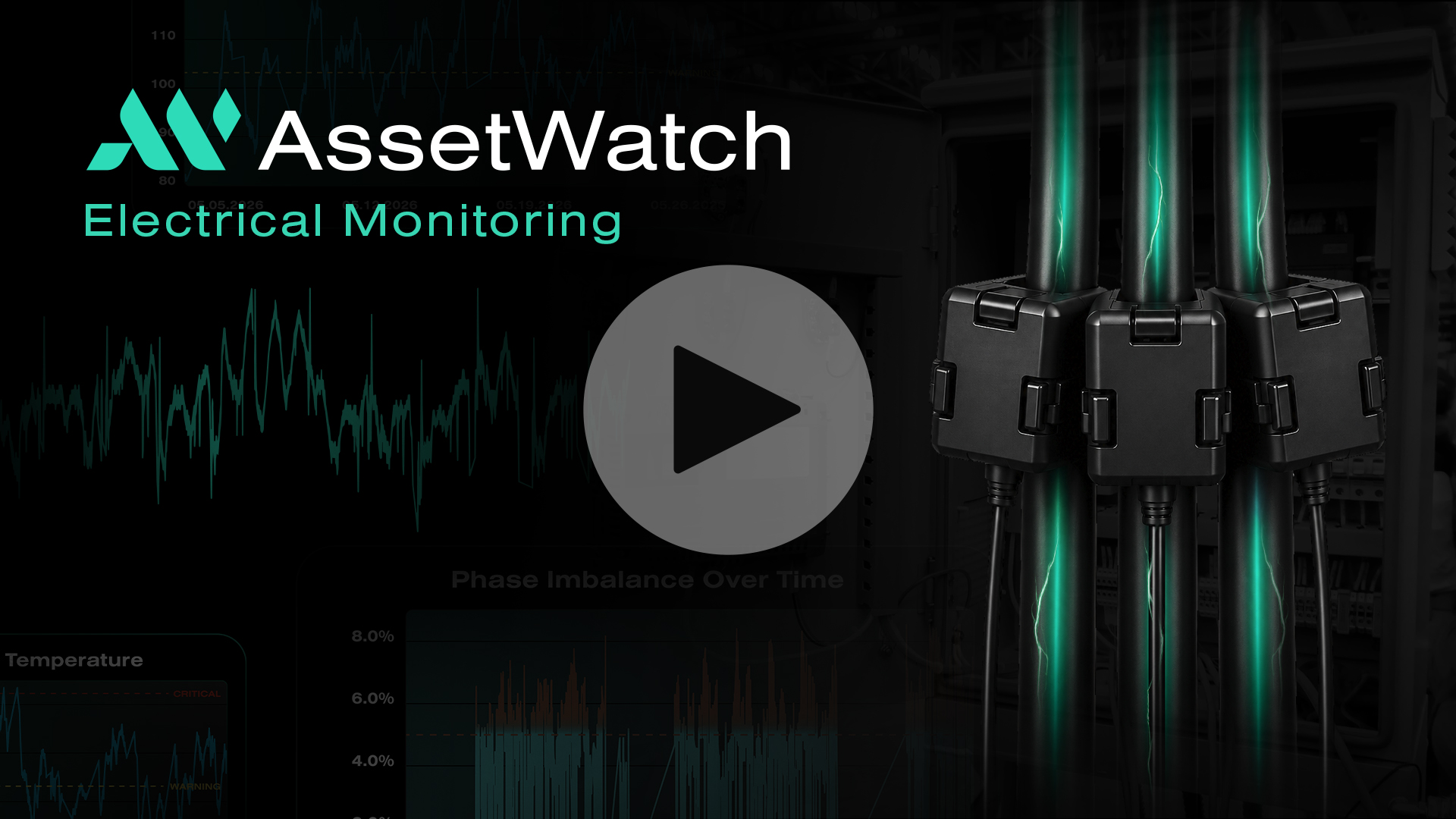
AssetWatch Electrical Monitoring adds continuous three-phase current, runtime, and panel-temperature monitoring to the condition monitoring program your team already runs. Reviewed by the same CMEs who know your equipment.

What is AssetWatch Electrical Monitoring?
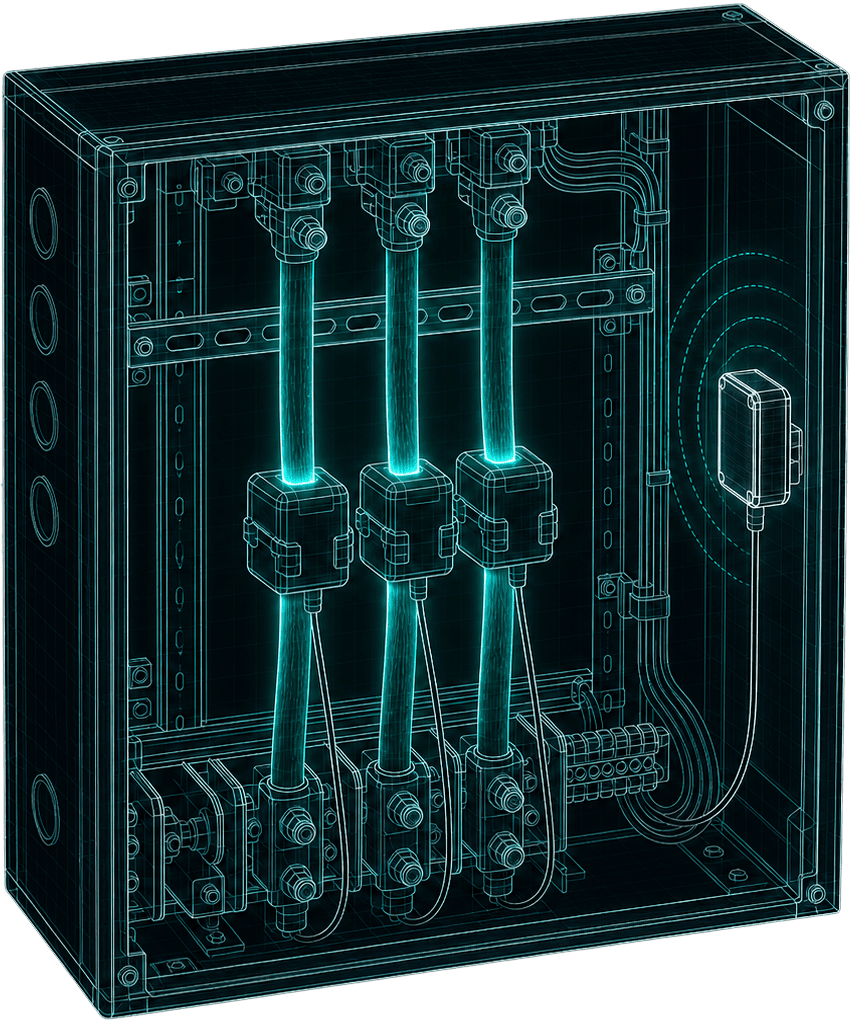
AssetWatch Electrical Monitoring continuously tracks three-phase current, runtime, and panel temperature on AC motors. That data reveals winding degradation, current unbalance, and sustained overload before mechanical symptoms appear. The wireless sensor installs in the electrical panel, not on the motor. Your dedicated CME reviews the findings with your vibration and oil analysis data and recommends what to do next.
Used by Leading U.S. and Canada Manufacturers
electric motor condition monitoring
Complete coverage. Deeper insights. From the experts you already trust.
Same CMEs you already trust. Continuous electrical condition monitoring on every AC motor on your floor, alongside the vibration and oil data they already analyze.
Weeks Before Mechanical Symptoms
Winding degradation, current unbalance, and load-related faults appear in electrical data long before they become visible in vibration. Identify issues early and plan maintenance proactively.
See Which Motors Are Working Hardest
Understand how equipment is being utilized to optimize asset performance, maintenance planning, and production efficiency.
Monitor Assets Vibration Can't Reach
In-panel installation extends condition monitoring to assets and locations where vibration sensors are impractical or cost-prohibitive.
Electrical, Mechanical, or Lubrication?
Correlate electrical, vibration, and oil analysis data to quickly pinpoint root causes
electrical load analysis
Vibration tells you a motor moves. Electrical tells you why.
See more than vibration alone can tell you. Current changes reveal shifts in load, process conditions, and equipment health. A worn bearing creates drag and drives current up. A worn impeller reduces load and drives current down. Together, electrical and vibration provide a more complete picture of asset health. AssetWatch combines both with AI-powered analytics and dedicated U.S.-based CMEs who turn data into actionable maintenance recommendations.

electrical monitoring services
Not an alert. An answer.
Every plant gets a dedicated, locally based AssetWatch Condition Monitoring Engineer who knows your equipment, your processes, and your team. Not an overseas call center. Not a generic alert queue.
The data shows:
Current is too high, too low, or uneven across phases.
Your CME helps answer:
What is this current pattern telling us about the motor, the driven equipment, or the electrical load?
Example guidance:
“Current is trending below normal for this pump. That can indicate the motor is running, but the pump may not be doing useful work. Inspect for impeller wear, flow restriction, or coupling issues.”
The data shows:
This motor is running longer, harder, or at hours it normally wouldn’t.
Your CME helps answer:
Is this a process change, a control issue, uneven asset utilization, or an early sign of equipment stress?
Example guidance:
“This pump is running more hours than its paired asset and spending more time at high load. Rebalance usage or inspect the process conditions before one asset wears prematurely.”
The data shows:
Panel temperature is rising above its normal range.
Your CME helps answer:
What inside or around this panel is creating heat risk?
Example guidance:
“This panel is trending hot. Inspect cooling, ventilation, VFDs, PLCs, contactors, and nearby heat sources before the panel takes down connected equipment.”
Electrical data alongside vibration, temperature, and oil. All in one view.
Same dashboard, same workflow, same CME reviewing all your data streams together. Not two systems duct-taped together. One platform, one source of truth.
.png)
Vibration · Motor Drive End
.png)
Electrical · 3-Phase Current
Continuous monitoring
AI watches your data around the clock and flags developing electrical faults the moment they appear.
Dedicated CME
Your locally based AssetWatch CME interprets every flag in the context of your equipment, your processes, and your team. Not an overseas call center. Not a generic alert queue.
Prescriptive findings
Every finding tells you what was detected, why it matters, and exactly what to do next.
electrical panel monitoring system
From clamps in the panel to findings in days.
Non-intrusive install. No motor downtime. No control system integration. Continuous monitoring starts the moment the clamps are in.
CT clamps in the panel
Self-powered CT clamps installed in the existing electrical panel.
Zero system integration
No batteries, no voltage taps, no control system integration.
Your electrician installs it
Your on-site electrician handles installation. AssetWatch provides full guidance and documentation.
Monitoring starts immediately
Continuous monitoring begins immediately after installation.
Findings in your existing platform
Expert findings and recommendations delivered through the same AssetWatch platform you already use.
electric motor predictive maintenance
Catch Electrical Problems Before They Become Downtime
Identify overload conditions, current unbalance, overheating panels, and abnormal operating patterns early. AssetWatch transforms motor current data into actionable insights so maintenance teams can prioritize issues, reduce manual checks, and make better decisions with confidence.
electrical failure analysis
What AssetWatch Electrical has surfaced in customer environments.
A 6-hour panel temperature spike no one was looking for.
A printing facility had a recurring history of motor overheating on a specific die-cutting line, with no clear root cause.
AssetWatch Electrical caught a 6-hour panel temperature spike that aligned exactly with the die-change process. Adjacent panels in the same room, running different motor types, showed no comparable behavior.
The heat wasn't a cooling failure. It was process-driven, tied to one specific operation. The team had a clear, named cause to address rather than chasing intermittent symptoms.
Compressors operating above their limits with no surface signs.
A paper facility had compressors that looked fine during walkdowns. No obvious overheating, no alerts on the floor.
Continuous current showed sustained operation above full load amperage, plus phase imbalance. The motors were working harder than rated and carrying uneven electrical load on top of it.
Specific assets identified before symptoms reached the floor. The kind of electrical evidence that prioritizes overworked motors against the rest of the maintenance backlog.
Practical questions, direct answers.
Electrical condition monitoring continuously measures three-phase current and panel temperature on AC motors during operation. Changes in these measurements (overcurrent, undercurrent, phase imbalance) indicate developing faults in the motor, its load, or the electrical supply, often weeks before mechanical symptoms appear. AssetWatch's approach pairs continuous electrical data collection with dedicated CMEs who interpret findings in the context of your specific equipment and operations.
No. CT clamps mount inside the panel. No motor modifications, no production downtime.
No. The sensor is self-powered through the CT clamps. No voltage taps, no network integration, no IT involvement required.
Yes. AssetWatch Electrical supports both variable frequency drive (VFD) controlled motors and across-the-line (ATL) started motors.
Up to 300-amp clamp configurations.
Self-powered through the CT clamps. No batteries to replace. No external power required.
Continuous monitoring starts immediately after the clamps are installed. Your CME delivers the first findings in days, not months.
Your dedicated, locally based AssetWatch CME — the same engineer who already reviews your vibration and oil data. Not an overseas call center, not a generic alert queue. One person who knows your equipment and your team.
Correlating electrical and vibration data helps separate the two. Vibration shows how a motor moves, and electrical shows why. Together they make the root cause clearer, so your team can fix the right thing the first time.
No. It adds another layer of insight alongside vibration and oil analysis. The two are complementary views of the same system, reviewed together on one platform.
AssetWatch Electrical tracks panel temperature alongside three-phase current. Your CME reviews the trend and recommends next steps if a panel runs hotter than normal.
Three-phase current, RPM (derived from current waveform analysis), and panel temperature.
AssetWatch Electrical continuously tracks three-phase current and panel temperature on AC motors. That data reveals winding degradation, phase imbalance, and sustained overload before mechanical symptoms appear. Your CME reviews the findings and recommends what to do next.
See what electrical analysis adds to your program.
A 30-minute demo on real customer data shows exactly what your CME would surface from your motors.