10 Downtime Horrors Stopped Just in Time
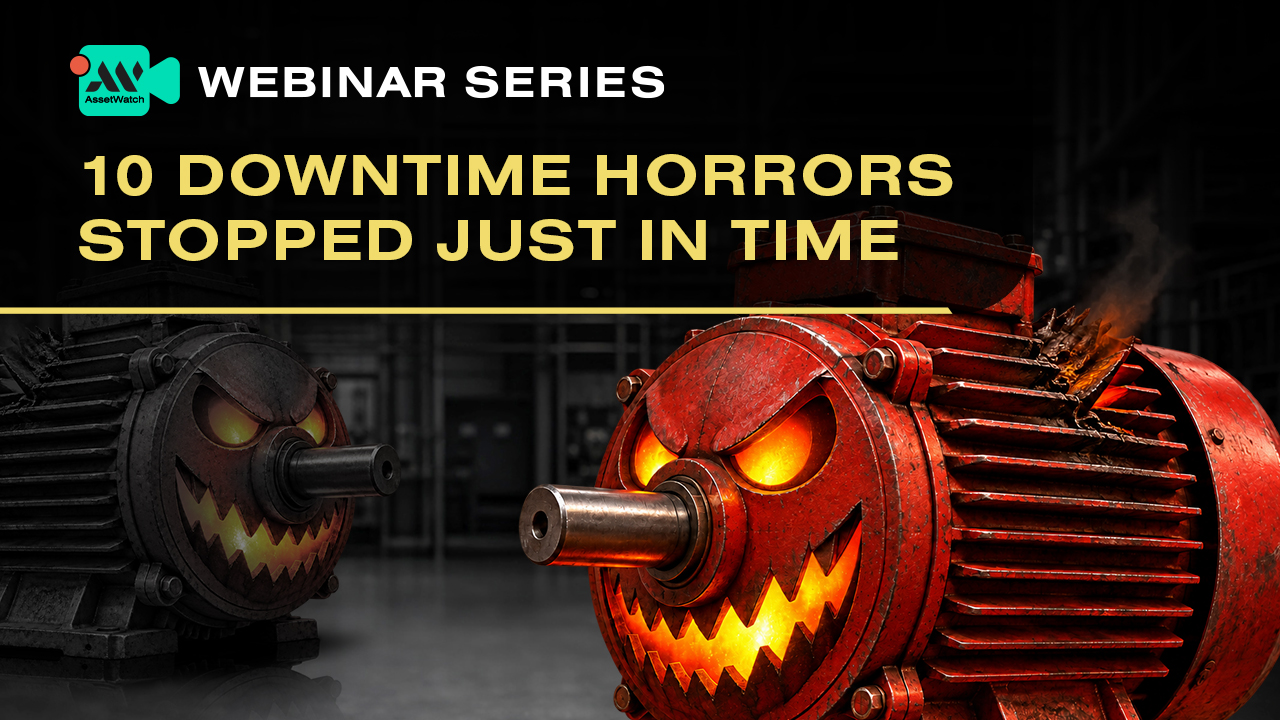
Every plant has close calls. The bearing caught three weeks before it seized. The gearbox pulled during a planned outage instead of on a Saturday night. The temperature trend somebody happened to check on a Thursday afternoon. Those stories get told once and then forgotten.
The problem is that almost nobody examines them closely. The alert fires, the work gets done, the line keeps running, and the team moves on to the next fire. The pattern connecting one save to the next, the thing that tells you where your next close call is hiding, never gets extracted.
In this on-demand webinar, AssetWatch Condition Monitoring Engineers share 10 real equipment saves from manufacturing. They walk through each one from the early signal and failure scenario avoided to the operational and financial impact.
Why Saves Matter
A save records three things a failure never does: which signal appeared first, how much runway that signal bought, and what the failure would have cost if nobody had been watching. It is the clearest evidence a reliability program produces.
Across a set of saves, you can see which signals show up first, which failure modes your monitoring is structurally blind to, and where detection lead time gets created by technology and then quietly spent by process.
What You'll Learn
- Spot the early signals: Recognize what precedes the most common catastrophic failures, including bearing degradation, lubrication failure, and thermal and electrical faults, and know which ones your current monitoring would actually catch.
- Follow a save end to end: Trace a save from first signal to completed work order and see where detection lead time is created and where it gets spent.
- Read the P-F curve as a detection window: Understand why the signal most basic monitoring reports is one of the last to change before failure.
- Find your blind spots: Identify the failure modes your program can't see based on which technologies you've deployed against which assets, and why that's a coverage question, not a budget one.
- Quantify an avoided failure: Put saves in the terms operations and finance already use: downtime hours, secondary damage, expedite premiums, and lost throughput.
- Build a save log: Capture every close call so the next one is easier to catch.
10 Saves From the Field
The session walks through 10 detection events from the field, mapping each one back to the stage on the P-F curve where it was caught and what that lead time made possible.
Webinar Takeaways
You'll leave with a save log template, an early signal reference, a P-F curve technology map, and a coverage self-check, all usable with the monitoring and maintenance history your team already has.
Presenters:
Dale Burnham
Condition Monitoring Engineer, AssetWatch
Steve Gierden
Condition Monitoring Engineer, AssetWatch
Jim Hoffman
Condition Monitoring Engineer, AssetWatch
Dustin Moore
Condition Monitoring Engineering Manager, AssetWatch
