Achieving Zero Unplanned Downtime: Myth or Realistic Target?
Discover how predictive maintenance strategies powered by real-time data and human expertise enable lean teams to prevent failures and achieve zero downtime.

Zero unplanned downtime is no longer a fantasy reserved for industry outliers. In every sector of manufacturing, predictive maintenance is making zero unplanned downtime an achievable goal—even for lean maintenance teams.
Modern predictive maintenance (PdM) systems powered by Internet of Things (IoT) technology, advanced AI, real-time sensor data, and expert human guidance have rendered the "run to fail" reactive maintenance model obsolete. Maintenance and operations teams can now predict equipment failures before they occur and prevent them entirely.
The facilities that get the best results aren’t the ones with the most sophisticated dashboards. They’re the ones that combine predictive maintenance technologies with ongoing expert insight, a strong maintenance culture, and a focus on continuous improvement. When those elements align, the move toward zero downtime becomes not just realistic, but repeatable.
The Blind Spots Standing Between You and Zero Downtime
Why Zero Unplanned Downtime Has Been Hard to Achieve
Unplanned downtime cascades beyond the immediate machine failure. It disrupts production lines, increases labor costs, throws maintenance schedules out of alignment, and erodes confidence across both maintenance and operations teams.
Traditional maintenance strategies, including preventive maintenance and even some condition-based approaches, aren’t designed to fully eliminate surprise failures.
- A reactive strategy makes it impossible to predict failures, draining lean teams, asset life, and maintenance budgets.
- Preventive maintenance can involve unnecessary maintenance and repairs and miss failure risks that suddenly spike between service intervals.
- Older condition monitoring systems often rely on thresholds that are too broad to reliably detect early-stage issues.
The contrast with modern PdM systems is huge. Today's leading-edge predictive maintenance relies on real-time data, machine learning algorithms, and insights and prescriptive recommendations from a dedicated expert. Accurate maintenance predictions and timely maintenance actions go hand in hand.
In this environment, the benefits of predictive maintenance begin to flow fast: improvements in maintenance efficiency, uptime, and equipment reliability, along with lasting culture change.
Even lean maintenance teams can eliminate unplanned downtime. Our recent white paper Empowering the Lean Manufacturing Workforce explains how. ⬇️ Download your copy today.
How Machine Learning Strengthens Predictive Maintenance in Manufacturing
Machine learning has transformed the core of predictive maintenance work. Instead of relying on periodic checks or broad vibration thresholds, modern algorithms continuously ingest real-time data, historical data, and high-resolution vibration analysis to model the true behavior of critical assets.
Earlier Fault Detection Through Continuous Learning
Machine learning models evaluate operational data from thousands of similar machines, learning how assets behave under different loads, operating speeds, and environmental conditions. AI trained on billions of data points becomes remarkably adept at early fault detection. This allows teams to identify anomalies and perform maintenance well before potential failures, giving maintenance scheduling a proactive foundation instead of a reactive one.
Contextual Insight Instead of Binary Alerts
Unlike traditional monitoring systems, modern predictive models recognize patterns, not just thresholds. They identify misalignment, looseness, lubrication breakdown, bearing wear, or imbalance with increasing specificity. These insights feed directly into a facility’s broader predictive maintenance strategies and integrate easily with computerized maintenance management systems (CMMS) to streamline planning.
While machine learning accelerates accuracy, AI alone still can’t deliver the complete picture. Our e-book AI + Human Expertise in Predictive Maintenance reveals how the right balance helps create a reliable predictive maintenance strategy. 👉 Get your copy here.
Why Predictive Maintenance Strategies Rely on Human Expertise
While machine learning can identify anomalies, it can't fully interpret the context of your plant’s operating environment. A machine learning model doesn’t know:
- whether an anomaly is severe enough to stop production
- if your team already addressed a known issue
- how a failing component interacts with upstream or downstream process steps
- what your historical maintenance priorities have been
Without expert interpretation, even advanced predictive maintenance tools can cause alert fatigue, bombarding teams with alerts that lack human validation and context. Teams waste time troubleshooting false alarms, overlooking legitimate alerts, and reverting to reactive firefighting—thus missing out on the potential benefits and value of a PdM strategy.
Condition Monitoring Engineers: The Human Layer That Makes Predictive Maintenance Effective
A dedicated condition monitoring engineer (CME) evaluates every alert that AI surfaces. They confirm whether each anomaly is valid, assess severity, and interpret trends based on equipment health, operational norms, production goals, and known asset history.
Having a dedicated CME partner who knows your plant and works as an extension of your team is what transforms predictive maintenance models into actual predictive maintenance solutions. When a pattern of timely, effective action is established, your team will have the trust and momentum they need to safeguard critical assets and eliminate unplanned downtime for good.
The Prescriptive Maintenance Model: Turning Insight Into Action
Prescriptive recommendations eliminate guesswork, giving lean maintenance teams the exact guidance they need:
- what failure mode the asset is trending toward
- how urgent the issue is
- how soon action is needed
- what type of work should be performed
- what to monitor if immediate repair isn’t feasible
With these prescriptive insights amplifying the value of ongoing data collection and artificial intelligence, your team will have the power to reduce maintenance costs, make better decisions based on real-time asset condition, improve asset performance, and optimize operations.
Culture: The Differentiator in Predictive Maintenance Success
In truth, implementing a predictive maintenance system is more about people than it is about advanced technologies. The most successful facilities build a culture that values reliability, embraces PdM technology, and leans on expert support.
Shifting to a Predictive Maintenance Mindset
When teams begin seeing accurate alerts, successful asset saves, and fewer surprises on the production floor, they shift naturally from firefighting to planning ahead. Productivity rises, labor costs stabilize, and stress levels drop.
Upskilling Through Daily Interaction With Data
As it helps prevent failures, predictive maintenance also teaches teams how machines behave. Every validated alert becomes a micro-lesson. The more teams interact with high-quality data and CME insight, the faster they build confidence interpreting trends and making decisions.
Better Coordination Across Maintenance and Operations
Predictive maintenance provides the shared language that unites maintenance teams, operations teams, planners, and reliability engineers. With accurate, trusted data, teams collaborate more effectively on scheduling downtime, planning work, and avoiding unnecessary repairs.
Continuous Improvement Is the Engine Behind Zero Downtime
Achieving zero unplanned downtime is a milestone. Staying at zero requires ongoing refinement, made possible by:
- Machine learning improving with every new data point
- Human expertise strengthening as CME familiarity grows
- Teams building reliability muscle memory over time
As predictive maintenance becomes ingrained in everyday work, facilities reduce downtime, extend the life of critical equipment, and streamline maintenance tasks based on real needs rather than assumptions. The result is a system that evolves continuously—a key requirement for long-term reliability.
Curious about the value that prescriptive maintenance programs can deliver? Many facilities are seeing six- or seven-figure savings within the first year of implementing predictive maintenance. 💡 Check out these real-world case studies.
Is Zero Unplanned Downtime Realistic? Absolutely.
Hitting that zero downtime target isn't magic or luck, but the result of a process built around what your assets are actually telling you. With the right combination of predictive maintenance technologies, actionable operational data, expert human insight, and a reliability-focused culture, zero unplanned downtime is only the start of what your team can achieve.
Get There Fast with Predictive Maintenance Made Simple
The key to everything—smooth adoption, early asset saves, a more efficient maintenance process, more reliable production, and success at scale—is a predictive maintenance solution that's easy to integrate, use, and fully leverage.
▶️ Watch the on-demand webinar replay: Chaos Free Condition Monitoring
See how a 1-2 day install, seamless integration with your existing systems, and a dedicated CAT III+ partner can transform the day-to-day and performance at your plant.
Stay Ahead of Equipment Issues
See how predictive maintenance can help your team prevent failures and keep critical assets running.
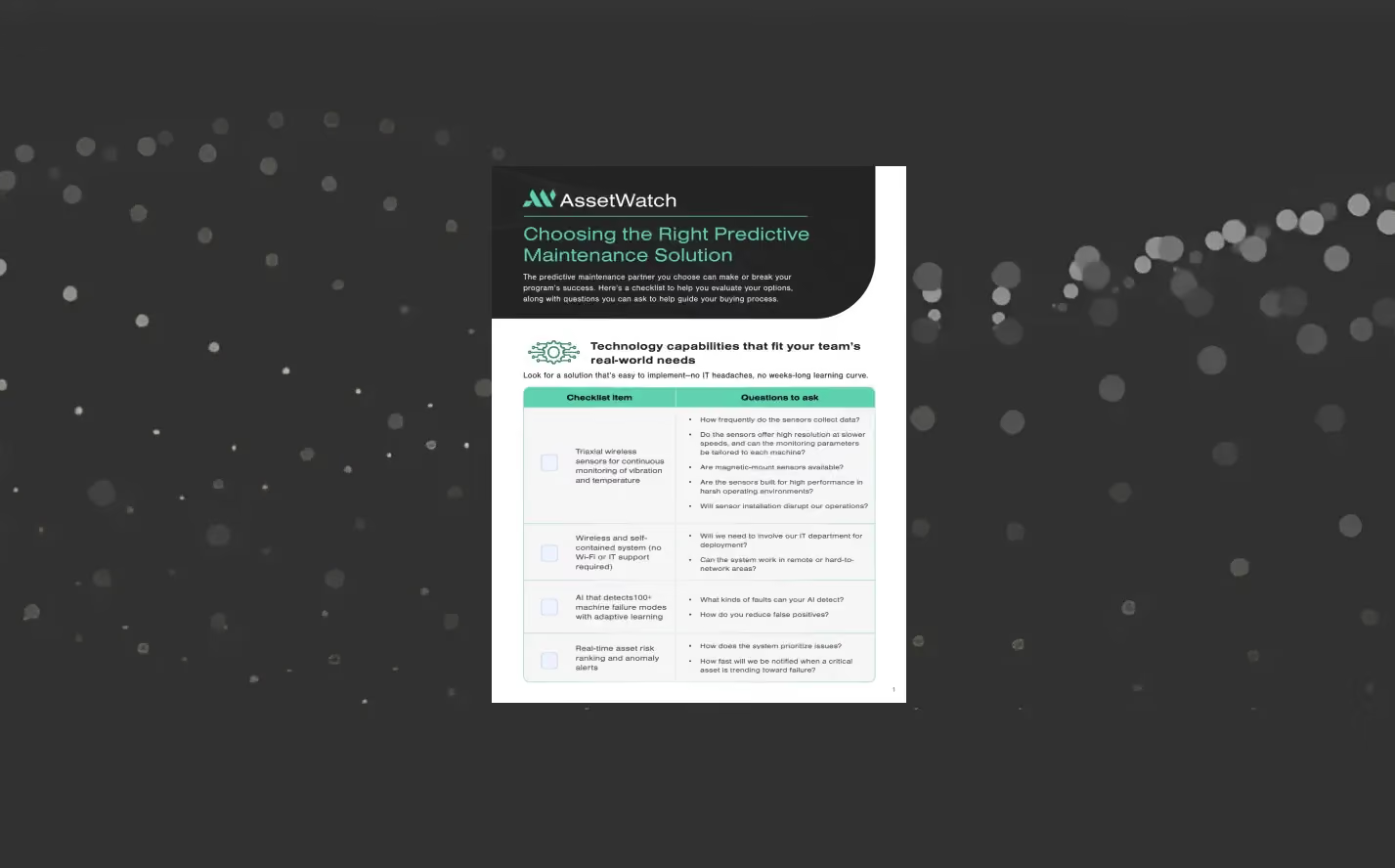
Choosing the Right Predictive Maintenance Solution


Upcoming Predictive Maintenance & Condition Monitoring Events
Discover the latest strategies in asset reliability and downtime reduction—browse our featured sessions below or view all upcoming events.



Predictive Maintenance Resources
Unlock expert strategies for better asset health—read our featured guides below or browse the full knowledge center.


.png)
.png)