Top 5 Hidden Causes of Unplanned Manufacturing Downtime
Learn the five hidden drivers of unplanned manufacturing downtime and how smarter visibility helps teams cut costs, minimize risk, and stay ahead of failures.

Key Points
- Lorem ipsum dolor sit amet, consectetur adipiscing elit. Ut faucibus augue vel ante porttitor, sed euismod nibh fermentum
- Consectetur adipiscing elit. Ut faucibus augue vel ante porttitor, sed euismod nibh fermentum
- Lorem ig elit Ut faucibus augue vel ante porttitor, sed euismod nibh fermentum
For manufacturing companies, unplanned downtime is never just about a broken machine. It’s the safety concerns, the missed production targets and deadlines, and the ripple effect across your entire supply chain. It's also the downtime costs—often thousands, maybe even millions of dollars—that hit long after the equipment is back online. Plus, with every downtime incident, your overall equipment effectiveness takes a hit.
Even teams with planned maintenance schedules, routine preventive maintenance tasks, and a solid grasp of their asset list still see unexpected production downtime. That's because the biggest threats to reliability tend to be the ones you can’t see until they’re already causing damage.
Here are five hidden causes of machine downtime that quietly derail operational efficiency, plus how manufacturers are tackling them before they turn into costly surprises.
Uncover the Failures You Cannot See Yet
1. Mechanical Degradation That Happens Between Inspections
Even the most experienced maintenance pros can’t detect what they can’t see, hear, or feel. Bearings start to wear, shafts drift out of alignment. Looseness builds slowly. Because issues like these often develop between scheduled inspections, they go unnoticed until they escalate into sudden equipment failure.
This is where real-time monitoring and machine learning make all the difference for manufacturing operations. Continuous vibration insights help detect anomalies before they cascade into failure. Instead of guessing what’s happening between rounds, teams get instant visibility into potential failures long before downtime occurs so they can plan accordingly and minimize downtime overall.
Is there an easy way to track equipment health and performance? 💡See how real-time visibility works inside AI-powered condition monitoring software.
2. Lubrication & Oil Contamination You Won’t Spot With the Naked Eye
Oil contamination and improper lubrication are two of the most common but overlooked drivers of unexpected downtime. Early indicators like additive depletion, particle buildup, or viscosity changes happen microscopically, hidden inside gearboxes, pumps, motors, and hydraulic systems.
Without consistent oil analysis (and someone to interpret the results), the early stages of wear simply don’t get noticed. This leads to:
- Accelerated damage
- Reduced performance and efficiency
- Higher maintenance costs
- More frequent production disruptions
- Shortened asset life
Comprehensive oil analysis is one of the fastest ways to reduce unplanned downtime and extend equipment longevity. Oil analysis results can reveal simple fixes that lead to major cost savings. When oil analysis data is paired with vibration monitoring data, teams can see both the symptoms and the root cause of problems before they become failures.
Curious how regular oil analysis can boost asset performance and value? Global manufacturer Worthington Steel extended asset lifespan by 12.5 years and achieved 15X ROI. 👉 Read the case study to find out how.
3. Human Error and Process Breakdowns That Create Invisible Risk
Human error is still one of the leading causes of downtime in manufacturing. It’s also one of the least discussed.
Whether it’s missed inspections, inconsistent task execution, misunderstandings between shifts, outdated SOPs, or new hires learning on the fly, small process gaps compound over time. In lean manufacturing environments, where teams are already overstretched, these slips can be the difference between planned downtime and a full-blown shutdown.
Technology helps, but simplifying workflows is just as important. Clear dashboards, real-time alerts validated by experts, and automated documentation reduce the burden on teams and minimize guesswork.
Want a deeper dive on helping lean teams conquer downtime and drive process improvements? ⬇️ Download the white paper on empowering the lean manufacturing workforce.
4. External Events, Environmental Instability, and Backup System Failures
Some downtime doesn’t come from the asset at all, but from everything around the asset. These issues are notorious for creating both direct costs (lost production, emergency repairs) and hidden costs (declining morale, rescheduling, supply chain pressure). External risks include:
- Power outages
- Network disruptions
- Backup systems that fail to activate
- Environmental changes (temperature swings, humidity, dust)
- Natural disasters or weather-related instability
Modern monitoring and integrations help teams respond faster and automate parts of their contingency planning. When systems talk to each other—your sensors, your CMMS, and your production tools—your operations become far more resilient and less susceptible to disruption.
By integrating their CMMS, predictive maintenance platform, and MES, INX International had the unified visibility they needed to turn insights into action and expand across facilities within months. 👉 Read about their reliability journey here.
5. Operational Inefficiencies You Don’t Realize Are Hurting Your Assets
Sometimes downtime starts with a process. These inefficiencies cause subtle wear, unnecessary stops and starts, and imbalanced runtime across assets. Over time, they erode equipment effectiveness and create the perfect conditions for machine failure.
Hidden process-driven contributors include:
- Raw material inconsistencies
- Poor changeover coordination
- Upstream/downstream bottlenecks
- Labor shortages
- Misaligned production plans
- Communication breakdowns
- Overproduction or underutilization cycles
Manufacturers are addressing this by turning to platforms that unify their data, bringing vibration, oil, runtime trends, and alerts into one shared view. When teams share the same information, everyone—from maintenance to operations to leadership—moves in sync.
Looking to drive continuous improvement? 🔍 Explore how AI-driven predictive maintenance and dedicated CAT III+ support empowers teams to safeguard machine health, streamline processes, and score major gains across critical KPIs.
Bottom Line: Hidden Problems Don’t Stay Hidden Forever
Unplanned manufacturing downtime doesn’t come out of nowhere. Often, there are early warning signs no one can see, subtle trends no one has time to track, and process gaps no one realizes are happening.
But downtime isn’t inevitable. With continuous monitoring, predictive analytics, and expert-guided next steps, your can finally eliminate the blind spots that lead to prolonged downtime, supply chain disruptions, and lost revenue.
And if you’re ready to take the next step toward healthier assets, improved equipment reliability, and more predictable production, we’ve put together a resource to help you get there.
Close Your Visibility Gaps Before They Become Downtime
Our recent e-book Closing the Asset Health Visibility Gap breaks down exactly how predictive maintenance strategies enabled by real-time monitoring, oil analysis AI, and expert CME guidance work together to help facility teams prevent failures and drive continuous improvement. It’s your roadmap to reducing downtime, strengthening reliability, and empowering your team to work proactively instead of reactively.
🔍 Download the e-book to uncover the hidden risks inside your production line—and learn how to eliminate them for good.
Stay Ahead of Equipment Issues
See how predictive maintenance can help your team prevent failures and keep critical assets running.
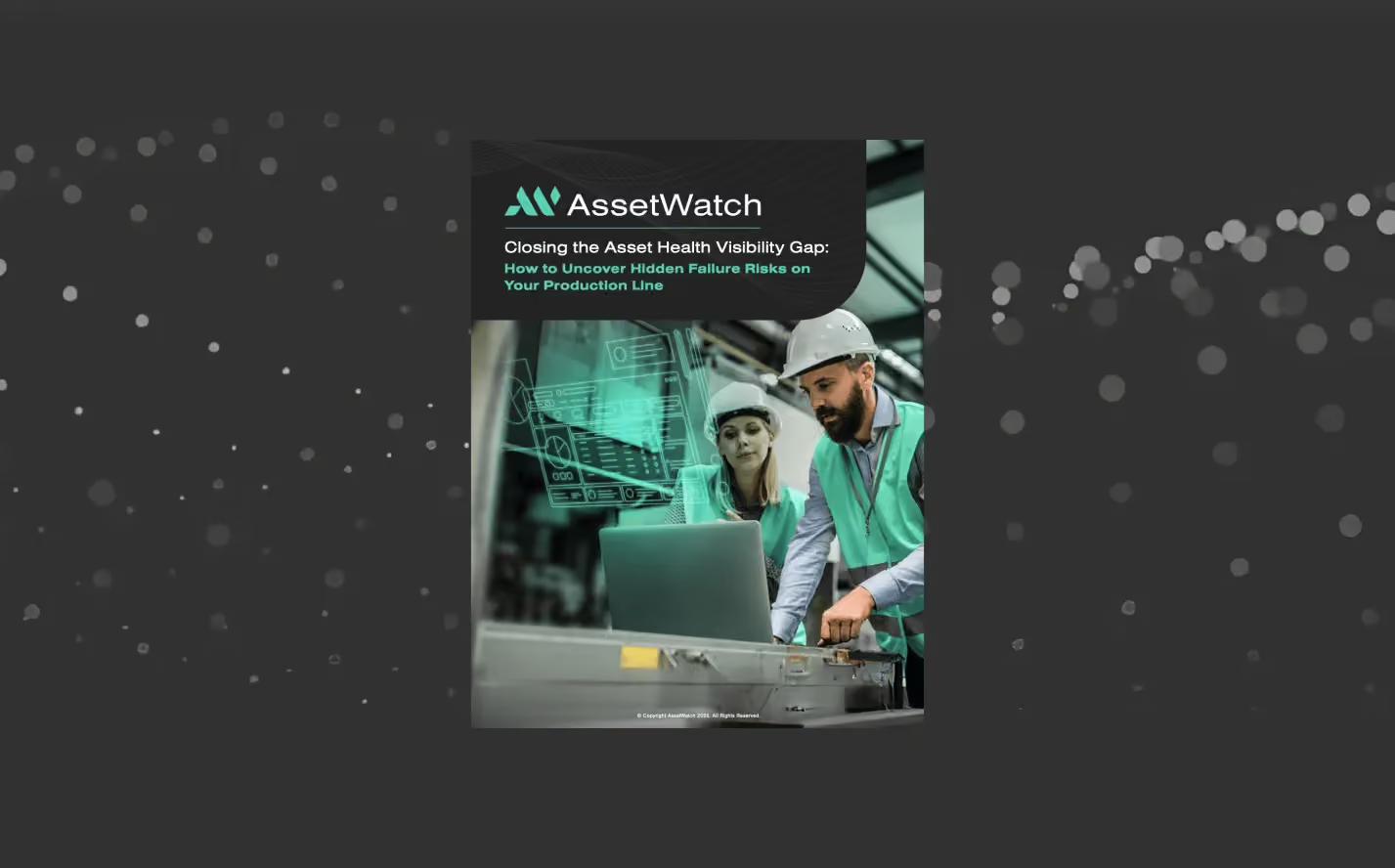
Closing the Asset Health Visibility Gap: How to Uncover Hidden Failure Risks on Your Production Line


Upcoming Predictive Maintenance & Condition Monitoring Events
Discover the latest strategies in asset reliability and downtime reduction—browse our featured sessions below or view all upcoming events.



Predictive Maintenance Resources
Unlock expert strategies for better asset health—read our featured guides below or browse the full knowledge center.
.png)
.png)
.png)